If you’ve tried antidepressants, therapy, or both, and still struggle with depression or anxiety, you’re not alone, and there is hope. TMS (Transcranial Magnetic Stimulation) therapy is a proven, non-invasive treatment that uses targeted magnetic pulses to directly stimulate underactive areas of the brain associated with mood regulation. At Elumind, we’re bringing this breakthrough technology to all our locations in North Vancouver, Surrey, and Kelowna.
What is TMS therapy?
Transcranial Magnetic Stimulation (TMS) is an FDA-cleared, Health Canada-approved treatment for major depressive disorder and OCD. Unlike medications that circulate through your entire body, TMS works locally, delivering focused magnetic pulses to specific regions of the brain that control mood, motivation, and emotional regulation.
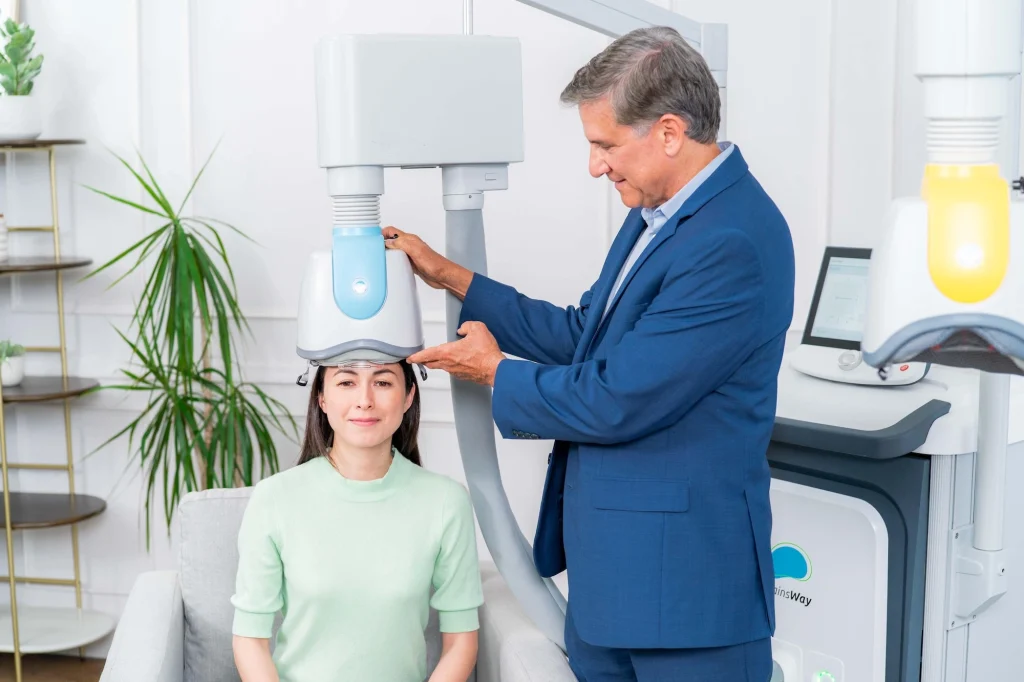
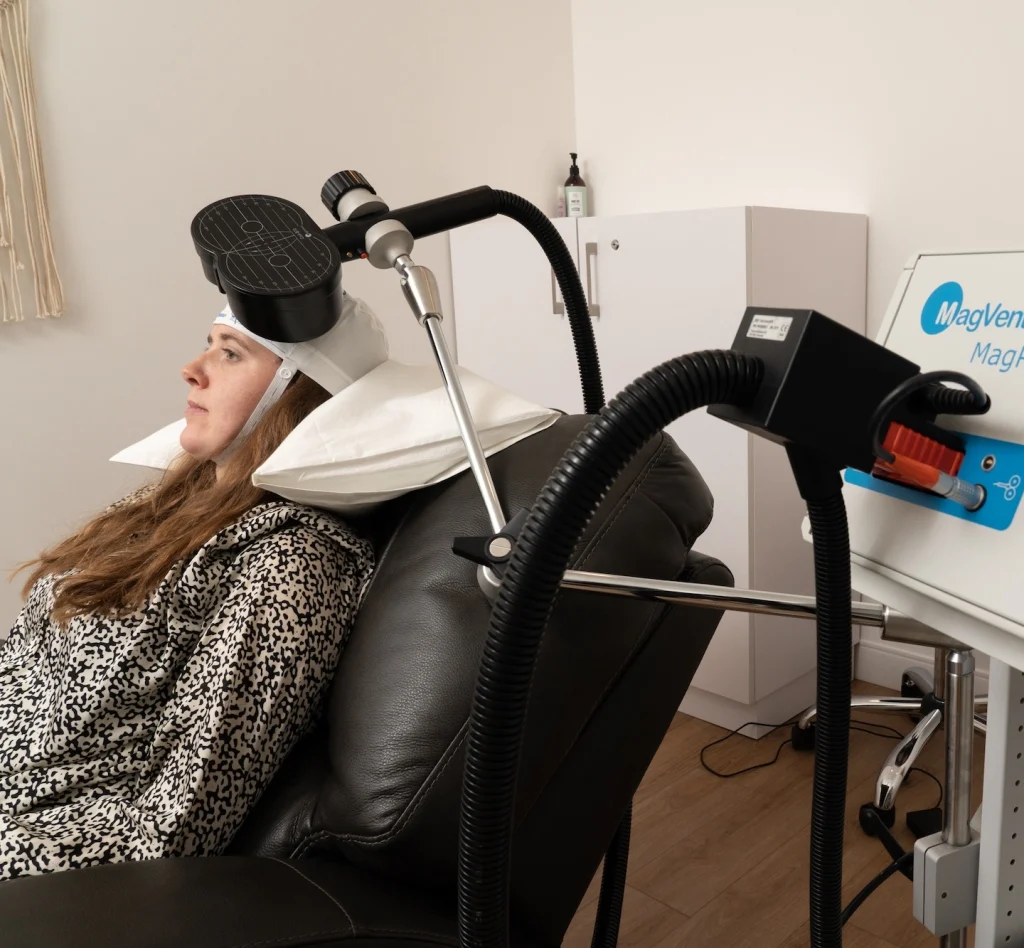
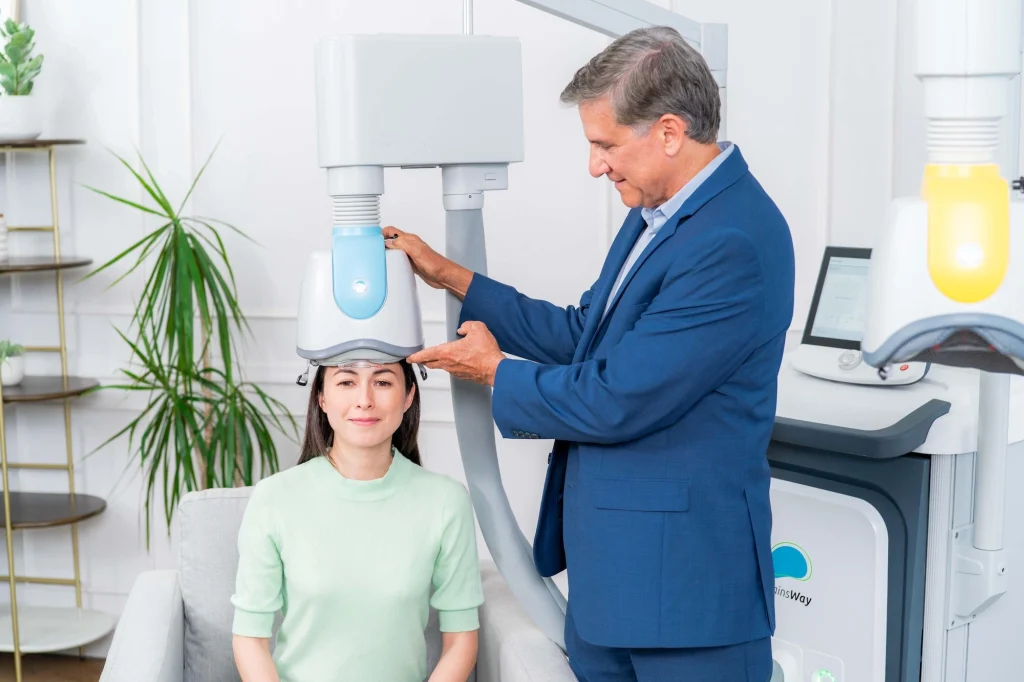
During a Magventure TMS session, a specialized coil is placed gently against your scalp. This coil generates magnetic fields similar in strength to an MRI, but highly targeted. These pulses pass painlessly through the skull and stimulate neurons in the prefrontal cortex, an area often underactive in people with depression.
The treatment is completely non-invasive. There’s no anesthesia, no surgery, and no recovery time. Most patients simply relax during their sessions.
How TMS helps depression and anxiety
Depression isn’t just a chemical imbalance, it’s also a problem of brain connectivity. Research shows that in people with depression, certain neural pathways become less active over time. The prefrontal cortex, which helps regulate emotions and executive function, often shows reduced activity. Meanwhile, the amygdala, the brain’s fear and stress center, may become overactive.
TMS therapy works by restoring balance to these networks. The magnetic pulses encourage neurons to fire more regularly, strengthening the connections that support healthy mood regulation. Over the course of treatment, this repetitive stimulation creates lasting changes in brain activity, changes that often persist long after the treatment course is complete.
Studies show that approximately 50-60% of people with treatment-resistant depression experience significant improvement with TMS, and about one-third achieve full remission. For anxiety disorders, particularly when they co-occur with depression, TMS has shown similarly promising results.
What makes Deep TMS different?
At Elumind North Vancouver and Surrey, we offer Deep TMS technology, an advanced form of transcranial magnetic stimulation that reaches broader and deeper areas of the brain than traditional TMS. While standard TMS coils stimulate surface-level cortical regions, Deep TMS uses a patented H-coil design that can reach structures up to 4 cm below the skull.
This deeper, wider field of stimulation allows us to target multiple brain regions simultaneously, including areas involved in:
- Emotional regulation – prefrontal cortex and anterior cingulate
- Motivation and reward processing – critical for overcoming anhedonia
- Anxiety and fear responses – helping calm an overactive stress system
- Cognitive function – improving focus, memory, and decision-making
Deep TMS has been particularly effective for people who haven’t responded to traditional treatments, including those with complex presentations of depression, anxiety, or both.
The TMS treatment process at Elumind
Your journey with TMS begins with a comprehensive assessment. Our clinical team will review your mental health history, current symptoms, previous treatments, and overall health to determine if TMS is right for you.
Initial consultation and assessment
During your therapeutic assessment, we’ll discuss:
- Your experience with depression or anxiety, duration, severity, impact on daily life
- Previous treatments you’ve tried and their outcomes
- Any medications you’re currently taking
- Your treatment goals and what success would look like for you
Treatment sessions
A standard TMS treatment course involves:
- 5 sessions per week for 4-6 weeks (20-30 sessions total)
- 10-30 minutes per session – quick enough to fit into a lunch break
- No downtime – you can drive yourself to and from appointments and return to normal activities immediately
During your first session, we’ll map your motor threshold, the minimum magnetic intensity needed to produce a small muscle twitch in your hand. This personalized measurement ensures your treatment is both safe and effective. Then we’ll position the coil over the treatment area and begin the session.
Most clients describe the sensation as a light tapping on the scalp, unusual at first, but not painful. Any initial discomfort typically decreases after the first few sessions as you become accustomed to the sensation.
Monitoring progress
We track your symptoms regularly using standardized clinical scales. Many clients begin noticing improvements around week 2-3, with continued progress throughout the treatment course and often for weeks afterward as the brain continues to reorganize.
Who is TMS right for?
TMS therapy Vancouver, Surrey, and Kelowna, BC is particularly well-suited for adults who:
- Have been diagnosed with major depressive disorder or persistent depressive disorder
- Haven’t responded adequately to at least one antidepressant medication
- Experience significant side effects from medications
- Prefer a non-medication approach or want to reduce medication use
- Have depression with co-occurring anxiety
- Are looking for a treatment with minimal side effects
TMS may treat OCD, PTSD, smoke cessation, depression, and other mental health conditions.
Safety Considerations
TMS is very safe, but it’s not right for everyone. The treatment is contraindicated for people with:
- Metallic implants in or near the head (except dental fillings)
- Cochlear implants
- Deep brain stimulators
- History of seizures or epilepsy (relative contraindication — discuss with your doctor)
We carefully screen all clients before treatment to ensure safety.
What results can you expect?
Clinical research on TMS therapy is extensive and encouraging. Large-scale studies show:
- 50-60% response rate – significant reduction in depression symptoms
- 30-40% remission rate – complete or near-complete resolution of symptoms
- Durable results – many clients maintain improvement for a year or longer
- Minimal side effects – most common is mild scalp discomfort during treatment
Unlike antidepressants, which can cause weight gain, sexual dysfunction, or emotional blunting, TMS side effects are typically limited to mild, temporary scalp discomfort and occasional headache. There’s no cognitive impairment, no sedation, and no systemic effects.
Some clients experience transformative results, a lifting of the heavy fog that’s defined their daily experience for months or years. Others notice gradual improvements: better sleep, increased energy, improved concentration, renewed interest in activities, better emotional regulation.
TMS Therapy in Elumind
Elumind offers both types of TMS at our locations. We have Deep TMS available at our North Vancouver and Surrey clinics, and MagVenture TMS is available at our Kelowna clinic.
Elumind provides:
- Convenient location with easy access and parking
- Flexible scheduling including early morning and evening appointments
- Experienced clinical team trained in TMS therapy and mental health treatment
- Integrated approach – we can combine TMS with neurofeedback, biofeedback, PBM, counselling, or other therapies
Understanding the science: Why brain stimulation works
The brain is fundamentally electrical. Every thought, feeling, and behavior is the result of neurons communicating through electrical and chemical signals. When you’re depressed, certain brain circuits become dysregulated, firing too little, too much, or in uncoordinated patterns.
TMS works by externally influencing this electrical activity. The magnetic pulses induce small electrical currents in brain tissue, encouraging neurons to fire. When this happens repeatedly over weeks, it triggers neuroplastic changes, the brain’s ability to rewire itself.
These changes include:
- Increased synaptic strength – connections between mood-regulating neurons become more robust
- Enhanced neurotransmitter release – better availability of serotonin, dopamine, and other key chemicals
- Improved network connectivity – different brain regions communicate more effectively
- Neurogenesis – potential stimulation of new neuron growth in key areas
This is why TMS effects often outlast the treatment period, you’re not just temporarily boosting brain activity, you’re helping the brain establish healthier patterns.

Combining TMS with Other Treatments
TMS doesn’t have to be a standalone treatment. At Elumind, we often recommend integrating brain stimulation with other evidence-based approaches:
- Psychotherapy – TMS may make you more responsive to therapy by improving neuroplasticity and emotional regulation
- Neurofeedback – learn to self-regulate brain patterns for long-term resilience
- Medication – many patients continue antidepressants during TMS, sometimes reducing doses afterward
- Lifestyle optimization – sleep, exercise, nutrition, and stress management amplify TMS benefits
Our integrated approach means we can tailor treatment to your unique needs, rather than offering a one-size-fits-all solution.
Investment in your mental health
TMS therapy is a significant investment in your wellbeing.
Many extended health insurance plans provide coverage for TMS therapy, particularly when it’s documented as treatment for medication-resistant depression. Our administration team will work with you to:
- Verify your insurance coverage and benefits
- Provide detailed documentation for claims submission
- Explore financing options if needed
When considering cost, many clients find it helpful to weigh TMS against the ongoing expense of medications, therapy, and the personal cost of continued suffering, lost work productivity, strained relationships, and diminished quality of life.
Your next step: Book a free phone consultation!
If you’re tired of struggling with depression, OCD, PTSD, or anxiety, if previous treatments haven’t worked, or if you’re simply looking for a scientifically-proven alternative to medication, TMS therapy may be the breakthrough you’ve been looking for.
During your free phone consultation, you’ll connect with our client care team to discuss your history, explore whether TMS is right for you, and get all your questions answered, with no pressure and no obligation.
Book your free TMS phone consultation today:
📞 Call: (604) 220-8866
🌐 Online: elumind.com/booking/
Elumind locations:
North Vancouver – 210-221 Espalande W., North Vancouver, BC
Surrey – 203-17700 56th Ave., Surrey, BC
Kelowna – 302-1912 Enterprise Way, Kelowna, BC
You don’t have to keep living with mental health condition. There are options you haven’t tried yet, and one of them might change everything.





 Phone: (604) 220-8866 |
  Monday—Friday: 9:00 AM-7:30 PM