

If you’re a parent of a child with autism spectrum disorder (ASD) in Surrey, Langley, Delta, White Rock, or Maple Ridge, you know that finding effective support can feel overwhelming. You want to help your child thrive, to feel more comfortable in their own skin, communicate more easily, and navigate daily life with less frustration. Neurofeedback therapy offers a gentle, non-invasive way to support your child’s brain development alongside the other therapies and interventions you may already be using.
At Elumind Centers in Surrey, we work with families throughout the Lower Mainland to provide evidence-informed neurofeedback training specifically tailored for children with autism. Our approach respects your child’s unique neurology while helping their brain develop more flexible, adaptive patterns that support emotional regulation, attention, and social connection.
Understanding autism and the brain
Autism spectrum disorder affects how the brain processes information, particularly in areas related to social communication, sensory input, and behavioral flexibility. BC has seen significant increases in ASD identification rates in recent years, not because autism is becoming more common, but because awareness and diagnostic practices have improved. This means more families are seeking support earlier, which is encouraging.
Research using brain imaging and EEG technology has shown that many individuals with autism have distinctive patterns of brain activity. Some areas may show over-connectivity (too much activity or communication between regions), while others show under-connectivity. These patterns can contribute to challenges with:
- Sensory processing: Feeling overwhelmed by lights, sounds, textures, or other sensory input
- Emotional regulation: Difficulty managing frustration, anxiety, or big feelings
- Executive function: Challenges with planning, organization, and shifting between activities
- Social communication: Understanding social cues, making eye contact, or reading facial expressions
- Repetitive behaviors: Self-soothing through stimming or rigid routines
It’s important to understand that these aren’t deficits, they’re differences in how your child’s brain is wired. Neurofeedback doesn’t try to change who your child is. Instead, it helps their brain develop more balanced, flexible patterns that can reduce distress and expand their capacity to engage with the world in ways that feel good to them.
How neurofeedback works for children with autism
Neurofeedback is a type of biofeedback that trains the brain to regulate itself more effectively. Think of it as exercise for the brain, gentle, gradual training that builds new neural pathways over time.
During a neurofeedback session, sensors placed on your child’s scalp measure their brainwave activity in real time. This information is displayed through a computer program, often a movie, or even a YouTube program. When your child’s brain produces healthier, more organized patterns, the game plays smoothly or rewards appear. When patterns become dysregulated, the feedback changes. This immediate feedback helps the brain learn to self-regulate naturally.
For children with autism, neurofeedback protocols are carefully customized based on a comprehensive qEEG brain map. This assessment shows us exactly where your child’s brain activity differs from typical developmental patterns, allowing us to target specific areas that may be contributing to their challenges.
What neurofeedback targets in autism support
Our neurofeedback programs for children with ASD typically focus on:
- Reducing anxiety and sensory overwhelm: Training the brain to maintain calmer baseline states
- Improving attention and focus: Strengthening the brain’s ability to sustain concentration and filter distractions
- Supporting emotional regulation: Developing better control over emotional responses and meltdowns
- Enhancing flexibility: Helping the brain shift more easily between activities and adapt to changes
- Promoting better sleep: Many children with autism struggle with sleep; neurofeedback can help regulate sleep-wake cycles
Parents often report that their child seems more present, more comfortable in social situations, and better able to communicate their needs after completing a course of neurofeedback training.
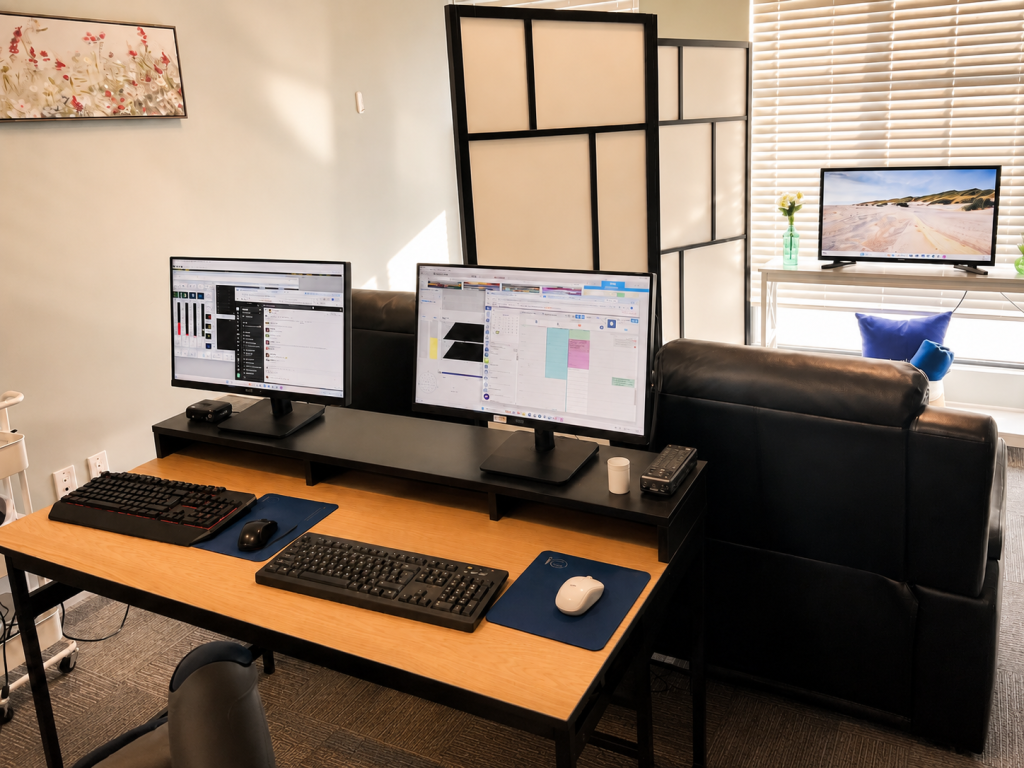
What to expect: Neurofeedback for autism at Elumind Surrey
We understand that trying a new therapy can feel daunting, especially if your child is sensitive to new environments or experiences. Our team at Elumind Surrey is experienced in working with children on the spectrum, and we take great care to make sessions comfortable, predictable, and even enjoyable.
Step 1: Free consultation – Your journey begins with a complimentary phone consultation where you can ask questions, share your child’s history, and learn whether neurofeedback might be a good fit. We’ll discuss your child’s specific challenges, current therapies, and goals. There’s no pressure, just information and honest guidance.
Step 2: Therapeutic assessment and comprehensive qEEG brain map – If you decide to move forward, we’ll schedule a therapeutic assessment and a qEEG assessment. qEEG brain map non-invasive brain scan that records your child’s brainwave activity across multiple areas of the brain. The sensors simply rest on the scalp, there’s no electricity going into the brain, no pain, and no side effects.
The assessment takes about 50 minutes. For children who find this challenging, we work at their pace, sometimes breaking the assessment into shorter segments.
Once complete, our clinical team analyzes the data and creates a detailed brain map showing areas of over-activity or under-activity, connectivity patterns, and how these relate to your child’s symptoms. You’ll receive a full report and review session where we explain what we found and how neurofeedback can help.
Step 3: Personalized neurofeedback training – Based on your child’s brain map, we design a customized neurofeedback protocol. Most children need between 20-40 sessions to see meaningful, lasting changes, though some families notice improvements much earlier.
During sessions, your child sits comfortably while watching a video or playing a game. The neurofeedback system provides real-time feedback to their brain, which gradually learns to produce healthier patterns. Many children find the sessions relaxing and enjoyable, some even look forward to them.
Step 4: Progress monitoring and adjustments – We track your child’s progress carefully throughout training, using parent questionnaires, behavioral observations, and periodic qEEG re-assessments. As their brain changes, we adjust protocols to continue supporting their development. You’ll have regular check-ins with our clinical team to discuss what you’re seeing at home and at school.
Neurofeedback as part of a comprehensive approach
It’s essential to understand that neurofeedback is not a standalone cure for autism, nor should it be. The most effective support for children with ASD involves a team of professionals working together. Neurofeedback works best when integrated with:
- Applied Behavior Analysis (ABA) or other behavioral therapies: Teaching specific skills and adaptive behaviors
- Speech and language therapy: Supporting communication development
- Occupational therapy: Addressing sensory processing and motor skills
- Educational support: IEP planning and school-based accommodations
- Family support: Parent education and sibling support
At Elumind Surrey, we see ourselves as part of your child’s care team, not a replacement for it. Neurofeedback complements these therapies by improving the brain’s underlying capacity to benefit from them, when a child is less anxious and more regulated, they’re more available for learning and connection.

The research: What studies show about neurofeedback and autism
While research on neurofeedback for autism is still evolving, several studies have shown promising results. A 2020 systematic review published in Applied Psychophysiology and Biofeedback found that neurofeedback training was associated with improvements in core autism symptoms, including social communication, attention, and behavioral flexibility.
Another study from 2019 examining children with ASD who completed neurofeedback training found significant improvements in executive function, emotional control, and adaptive behavior compared to control groups. Brain imaging confirmed that these behavioral changes corresponded with actual changes in brain connectivity patterns.
It’s important to note that research in this area is ongoing, and results vary from child to child. Neurofeedback should be considered an evidence-informed intervention, supported by clinical research and neurological principles, rather than an evidence-based standard of care. We’re transparent about this with families and focus on individualized outcomes rather than universal claims.
Why choose Elumind centers in Surrey
Surrey families have unique needs, and Elumind Centers has served the Fraser Valley community for years with specialized brain-based therapies. Here’s what sets our Surrey clinic apart:
- Experienced clinicians: Our team has extensive training in working with children on the autism spectrum
- Advanced qEEG technology: 19-channel qEEG brain map provides comprehensive data to guide treatment
- Customized protocols: Every child’s program is individually designed based on their unique brain patterns
- Comfortable, sensory-friendly environment: We understand sensory sensitivities and create a calm, predictable space
- Collaborative care approach: We work alongside your child’s existing therapy team
- Flexible scheduling: Including after-school and weekend appointments for working families
- Evidence-informed practice: Our protocols are based on current neuroscience research and clinical best practices
Our Surrey location is easily accessible from Newton, Guildford, Cloverdale, and throughout the Fraser Valley. We also serve families from Langley, White Rock, Maple Ridge, and Delta who are seeking specialized neurofeedback services.
Real changes Fraser Valley families have experienced
While every child responds differently to neurofeedback, we’ve seen meaningful improvements in many areas that matter most to families:
- Reduced frequency and intensity of meltdowns
- Improved ability to handle transitions and unexpected changes
- Better sleep patterns and easier bedtimes
- Increased eye contact and social engagement
- Greater tolerance for sensory experiences (clothing, food textures, loud environments)
- Improved focus during homework and structured activities
- More flexible thinking and problem-solving
- Reduced anxiety in social situations
These changes often have ripple effects, when a child is more regulated, the entire family experiences less stress. Parents report feeling more connected to their child, and siblings benefit from a calmer home environment.
Investment in your child’s brain health
We know that therapies for children with autism represent a significant financial investment for families. We’re committed to transparency about costs and working with you to make neurofeedback accessible.
At Elumind Surrey, neurofeedback sessions are priced individually, with package options available that reduce the per-session cost. The initial qEEG brain map assessment is a separate fee and includes comprehensive analysis and consultation.
Many extended health insurance plans provide coverage for neurofeedback. We can provide detailed receipts and supporting documentation to submit to your insurance provider.
During your free consultation, we’ll discuss financial options and help you understand what resources may be available to your family.
Take the first step: Book your free consultation
If you’ve been searching for additional support for your child with autism in Surrey, we invite you to explore whether neurofeedback might be a helpful addition to their care plan. Our team is here to answer your questions, address your concerns, and help you make an informed decision.
The first step is a complimentary 15-minute phone consultation with one of our client care team members. There’s no obligation, just an opportunity to learn more and determine if neurofeedback is right for your family.
Ready to learn more?
Call us directly at (604) 220-8866 or book your free consultation online at elumind.com/booking.
Our Surrey clinic is located at #203 – 17700 56th Avenue, Surrey, BC, with convenient parking and a comfortable, welcoming space designed with your child in mind.
You’ve already done so much to support your child. Let us help you explore what’s possible when we support their brain’s natural capacity to grow, adapt, and thrive.





 Phone: (604) 220-8866 |
  Monday—Friday: 9:00 AM-7:30 PM