

Chronic stress isn’t just feeling overwhelmed, it’s your nervous system stuck in high alert, day after day, unable to return to baseline. Unlike acute stress (which can actually be helpful), chronic stress rewires your brain, affects your physical health, and makes everyday tasks feel impossible. The good news? Your brain is remarkably adaptable, and with the right tools, you can train your nervous system to regulate itself again.
What Chronic Stress Actually Does to Your Brain and Body
When stress becomes chronic, your body remains in a state of physiological activation that was designed to be temporary. Your hypothalamic-pituitary-adrenal (HPA) axis, the stress response system, becomes dysregulated. Cortisol levels stay elevated. Your amygdala (the brain’s threat detector) becomes hyperactive, while your prefrontal cortex (responsible for rational thinking and emotional regulation) becomes less active.
This isn’t a character flaw or a sign of weakness. It’s a physiological response to sustained pressure. Over time, chronic stress affects nearly every system in your body: your immune function decreases, inflammation increases, sleep quality deteriorates, digestive issues emerge, and your risk for anxiety, depression, and cardiovascular problems rises significantly.
Think of it like leaving your car engine running at high RPMs constantly. Eventually, something breaks down. That’s what chronic stress does to your nervous system, and why managing it requires more than just “trying to relax.”
Why This Matters: How Chronic Stress Shows Up in Daily Life
You might recognize chronic stress in these patterns:
- Feeling wired but exhausted, unable to relax even when you have time
- Difficulty concentrating or making decisions that used to be easy
- Irritability or emotional reactivity that seems out of proportion
- Physical symptoms like tension headaches, jaw clenching, or digestive problems
- Sleep disruption, trouble falling asleep or waking at 3 AM with racing thoughts
- Feeling like you’re just getting through the day rather than living your life
- Social withdrawal or loss of interest in activities you used to enjoy
These aren’t separate problems, they’re all connected to a dysregulated stress response system. And they won’t resolve simply by taking a vacation or “thinking more positively.” Chronic stress requires a systematic approach that addresses both the physiological and psychological components.

Evidence-Based Strategies to Manage Chronic Stress
Effective stress management works at multiple levels: regulating your nervous system, changing thought patterns, and addressing lifestyle factors that either support or undermine your stress resilience.
Nervous System Regulation
Breathwork and vagal tone: Your vagus nerve is the main pathway between your brain and body for calming signals. Specific breathing techniques, particularly longer exhales than inhales, activate your parasympathetic nervous system. Try box breathing: inhale for 4 counts, hold for 4, exhale for 6, hold for 2. Practice this for 5 minutes twice daily.
Progressive muscle relaxation: Systematically tensing and releasing muscle groups helps your body recognize what relaxation actually feels like, something many people with chronic stress have forgotten. Start with your toes and work up to your head, holding tension for 5 seconds and releasing for 10.
Regular movement: Exercise is one of the most effective stress management tools available. It doesn’t have to be intense, even 20-30 minutes of walking daily helps metabolize stress hormones and promotes neuroplasticity. Consistency matters more than intensity.
Sleep Optimization
Protect your circadian rhythm: Get bright light exposure within an hour of waking. Dim lights 2-3 hours before bed. Keep your bedroom cool (65-68°F) and completely dark. Chronic stress and poor sleep create a vicious cycle, each makes the other worse.
Wind-down routine: Your brain needs a signal that the day is ending. Create a 30-60 minute buffer between your day and sleep: no screens, no work, no difficult conversations. Try reading, gentle stretching, or a warm shower.
Cognitive and Behavioral Approaches
Identify stress amplifiers: Chronic stress often involves rumination, replaying past events or worrying about future ones. When you notice this pattern, write down the thought, acknowledge it, and consciously redirect your attention to the present moment. This isn’t suppression; it’s training your attention.
Time boundaries: Much chronic stress comes from having no clear boundary between “on” and “off” time. Set specific work hours. Put your phone in another room for an hour each evening. Protect one day per week as non-negotiable recovery time.
Social connection: Isolation amplifies stress. Even brief positive social interactions, a 10-minute coffee with a friend, a walk with a colleague, can shift your nervous system state. Quality matters more than quantity.
Nutritional Support
Blood sugar stability: Blood sugar crashes trigger cortisol release, adding to your stress load. Eat protein and healthy fats with every meal. Minimize refined carbohydrates and caffeine (which can amplify anxiety in stress-sensitive individuals).
Magnesium-rich foods: Chronic stress depletes magnesium, and magnesium deficiency worsens stress response. Include dark leafy greens, nuts, seeds, and legumes in your diet. Many people benefit from magnesium glycinate supplementation (check with your healthcare provider).

How Brain-Based Therapy Can Help
While lifestyle changes are essential, sometimes chronic stress has created such deep patterns in your nervous system that you need more targeted intervention. This is where brain-based therapies become particularly valuable.
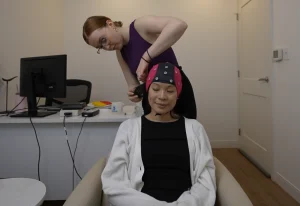
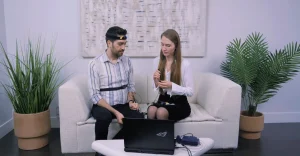
Biofeedback teaches you to recognize and change your physiological stress responses in real time. Using sensors that measure heart rate variability, muscle tension, breathing patterns, and skin temperature, you can see exactly how your body responds to stress, and learn to consciously shift those responses. Many people describe biofeedback as finally understanding what “relaxation” actually feels like physiologically, not just conceptually.
Neurofeedback goes a step further by training your brain’s electrical activity directly. If chronic stress has created overactive patterns in your amygdala or reduced prefrontal cortex function, neurofeedback can help restore healthier patterns. It’s particularly effective for people who feel like their stress response is automatic and beyond conscious control, because in many ways, it is. Neurofeedback works at the level where those automatic responses are generated.
tDCS takes a more direct approach by using a mild electrical current to shift how active certain brain regions are. If chronic stress has left your prefrontal cortex under-resourced to keep your amygdala in check, tDCS is designed to boost activity in the regions responsible for calm, deliberate thinking. It’s particularly useful for people who’ve tried talk-based approaches without success, because the imbalance isn’t always something you can think your way out of. tDCS works by adjusting the underlying activity level itself, before conscious effort even comes into play.
When to Seek Professional Support
Self-help strategies are valuable, but they have limits, especially when stress has become chronic. Consider professional assessment if:
- You’ve tried multiple approaches for several months without improvement
- Your stress is affecting your work performance or relationships
- You’re experiencing physical symptoms (chest pain, severe headaches, digestive issues)
- You’re using alcohol, substances, or other behaviors to manage stress
- You’re feeling hopeless or having thoughts of self-harm
Chronic stress is a legitimate health condition that responds well to treatment, but it rarely resolves on its own. Professional support can identify the specific patterns maintaining your stress response and create a targeted treatment plan.
Elumind specializes in brain-based approaches to stress management, working with clients throughout British Columbia. We start with comprehensive assessment, including qEEG brain map when appropriate to understand your unique stress patterns. Then we create a personalized treatment plan that may include neurofeedback, biofeedback, and other evidence-based interventions.
We offer a free 15-minute consultation to discuss your situation and whether our services might be a good fit. You can book online at elumind.com/booking or call us at (604) 220-8866.
Managing chronic stress isn’t about powering through or developing a thicker skin. It’s about giving your nervous system what it needs to regulate itself effectively, and sometimes that requires professional guidance. Your brain is capable of remarkable change, even after years of chronic stress. The first step is deciding you deserve that support.



 Phone: (604) 220-8866 |
  Monday—Friday: 9:00 AM-7:30 PM