Anxiety and panic attacks are among the most pervasive mental health challenges today, affecting millions of people across all age groups. With stressors mounting from work, school, finances, relationships, and global uncertainties, more individuals are seeking non-invasive, drug-free solutions for managing anxiety. One powerful approach gaining traction is biofeedback therapy.
This blog explores how biofeedback works, why it is particularly effective for anxiety and panic disorders, and how you can integrate it into a holistic mental health strategy.
Understanding Anxiety and Panic Attacks
Anxiety is more than just occasional worry. It can manifest in several forms:
- Generalized Anxiety Disorder (GAD): Persistent, excessive worry about various aspects of life
- Panic Disorder: Sudden and intense episodes of fear (panic attacks) often accompanied by physical symptoms
- Social Anxiety Disorder: Overwhelming fear of social interactions
- Phobias: Intense fear of specific objects or situations
Common symptoms of anxiety and panic attacks include:
- Rapid heartbeat
- Shallow breathing or hyperventilation
- Muscle tension
- Sweating
- Dizziness
- Chest pain
- Gastrointestinal discomfort
- A feeling of detachment or unreality (derealization)
These responses are governed by the autonomic nervous system (ANS), particularly the sympathetic nervous system, which triggers the “fight-or-flight” reaction. When this system is chronically overactive, it can keep the body in a constant state of hyperarousal.
What is Biofeedback?
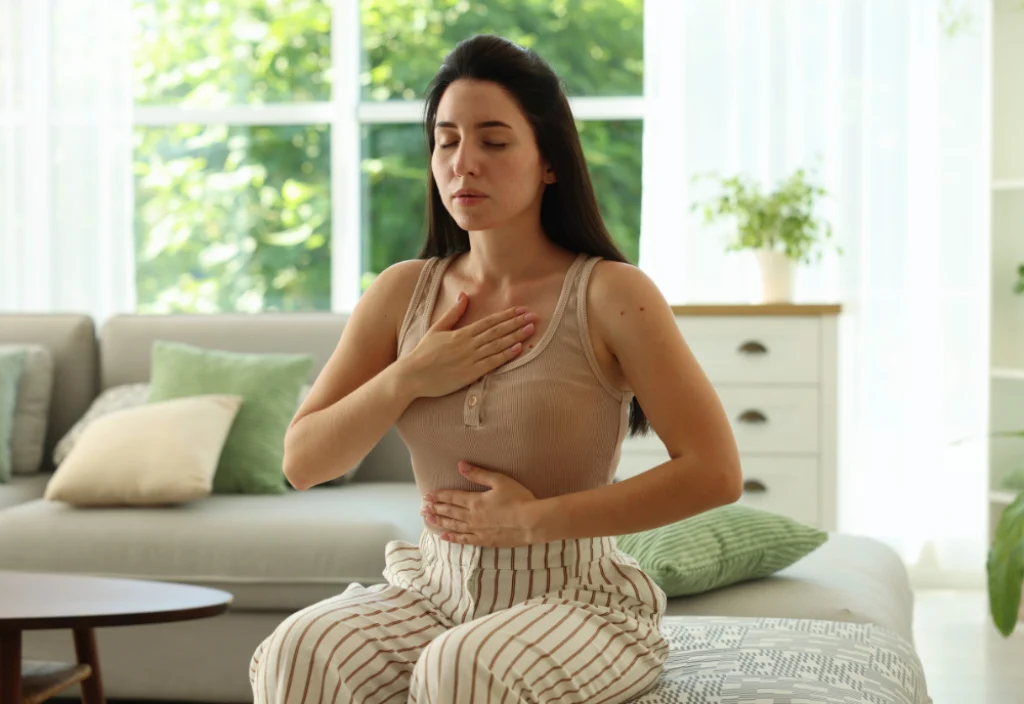
Biofeedback is a mind-body technique that trains individuals to control physiological processes that are typically involuntary. By using real-time feedback from sensors placed on the body, clients can learn to regulate:
- Heart rate
- Breathing rate
- Muscle tension
- Skin temperature
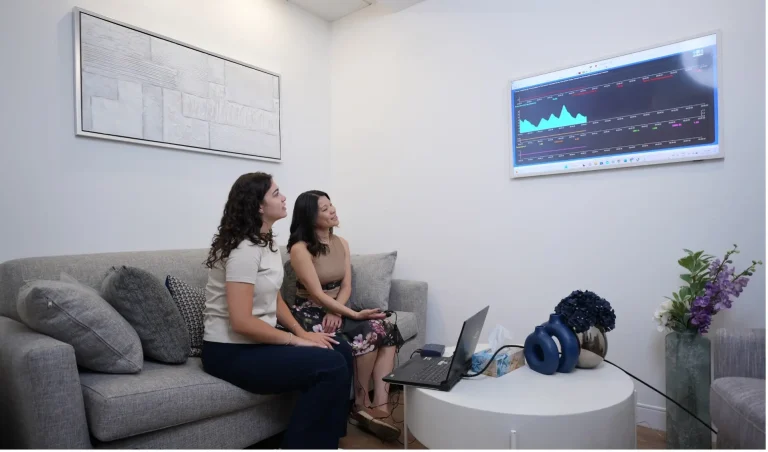
The feedback is often visual (graphs, animations) or auditory (tones, music) and helps individuals recognize stress responses and gradually learn how to control them consciously.
Types of Biofeedback Used for Anxiety
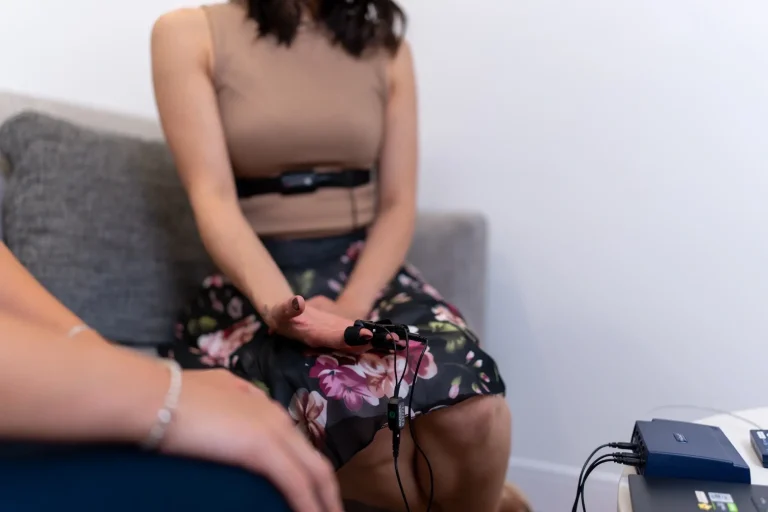
- Heart Rate Variability (HRV) Biofeedback: Measures the variation in time between each heartbeat. Higher variability is associated with relaxation and resilience. Clients are guided to improve their HRV through paced breathing and mindfulness techniques.
- Respiratory Biofeedback: Focuses on diaphragmatic breathing. Shallow, fast breathing is a hallmark of anxiety. Biofeedback helps retrain the breathing pattern to slow, deep breaths that stimulate the parasympathetic nervous system.
- Electromyography (EMG) Biofeedback: Measures muscle tension, particularly in areas like the jaw, shoulders, and forehead. Chronic tension is often unconscious, and biofeedback helps raise awareness and facilitate relaxation.
- Thermal Biofeedback: Measures skin temperature in fingers or toes. Lower extremity temperature often drops during stress. Increasing temperature is a sign of relaxation.
- Galvanic Skin Response (GSR): Measures the electrical conductance of the skin, which rises with sweat gland activity. It’s a strong indicator of arousal and anxiety.
How Biofeedback Helps with Anxiety and Panic Attacks
- Rewiring the Stress Response – Biofeedback allows clients to identify and reverse the physiological signs of anxiety before they escalate into full-blown panic. Over time, this builds body awareness and emotional regulation skills.
- Promotes Parasympathetic Activation – It encourages the “rest-and-digest” state, opposing the overactive sympathetic system. This calms the body, lowers heart rate, and reduces cortisol levels.
- Interrupts the Anxiety Loop – Anxiety feeds on itself. A racing heart may cause fear of an impending attack, which then worsens symptoms. Biofeedback breaks this cycle by giving individuals tangible control over their symptoms.
- Empowerment through Self-Regulation – Unlike medication, which often makes individuals feel reliant on external aid, biofeedback trains them to manage their physiology with minimal outside support.
- Improves Sleep and Resilience – Better autonomic regulation leads to improved sleep, energy, and resilience to daily stressors, all of which are crucial for anxiety management.
What Does a Biofeedback Session Look Like?
A typical session at a center like Elumind involves:
- An intake session to review symptoms, history, and goals
- Placement of sensors on fingers, chest, or scalp (non-invasive)
- Monitoring real-time data on a screen with neurotechnician guidance
- Practicing calming techniques while observing physiological responses
- Personalized exercises for home practice between sessions
Sessions are gentle, and most clients report a sense of calm during and after the session.
Complementary Therapies to Boost Biofeedback
At Elumind, we combine biofeedback with:
- QEEG Brain Map: To identify brainwave irregularities associated with anxiety and panic disorders.
- Neurofeedback: To retrain brainwave patterns toward calmer, more focused states.
- PBM (Photobiomodulation): Light therapy that helps with mood regulation and neuroinflammation.
Evidence and Research Behind Biofeedback
Multiple studies support the efficacy of biofeedback in treating anxiety disorders:
- A meta-analysis published in Applied Psychophysiology and Biofeedback (2017) found significant anxiety reduction across various populations.
- HRV biofeedback has shown long-term improvements in resilience, mood regulation, and cognitive flexibility.
- Biofeedback is included in the American Psychological Association’s list of evidence-based psychological treatments.
Is Biofeedback Right for You?
Biofeedback is suitable for:
- Individuals who prefer non-drug interventions;
- Those looking for long-term, skill-based solutions;
- Children, teens, and adults experiencing anxiety, chronic pain, migraine;
- People who want to enhance emotional regulation, focus, and resilience.
It is not recommended as a sole intervention for severe psychiatric conditions but works best in conjunction with other therapies.
Getting Started at Elumind
At Elumind Centres for Brain Excellence, we tailor biofeedback programs based on:
- Your unique symptoms
- QEEG Brain Map findings
- Lifestyle and stress profile
Our clinical team supports your journey with a blend of neuroscience, empathy, and cutting-edge tools. We believe in empowering individuals to understand and influence their mind-body connection.
Final Thoughts
Anxiety, panic attacks, chronic pain, migraine, sleep issues, and trauma may feel overpowering, but they are not unbeatable. Biofeedback puts the power back in your hands, literally and figuratively. By learning to control your body’s responses, you build inner resilience that lasts a lifetime.
If you’re ready to take the next step, Elumind is here to guide you.
“When you learn to control your body, you gain control over your mind.”





 Phone: (604) 220-8866 |
  Monday—Friday: 9:00 AM-7:30 PM