

Have you ever walked away from a conversation and spent the next hour thinking about something you said? Maybe you wondered whether your joke sounded strange, whether you talked too much, or whether the other person noticed how nervous you were.
Most of us have experienced moments like these. We sometimes feel uncomfortable meeting new people, speaking in front of a group, or attending an event where we don’t know anyone. Usually, those feelings fade once we settle into the situation.
But for someone living with social anxiety, that discomfort can be much stronger. A simple conversation with a coworker, answering a question in class, or making a phone call can feel like a major challenge. Sometimes, the worry begins days before the event and continues long after it’s over. Social anxiety can gradually change how people live. They may turn down invitations, avoid speaking up at work, or miss opportunities they genuinely want to pursue. Not because they aren’t interested, but because the possibility of embarrassment or judgment feels overwhelming.
The important thing to understand is that social anxiety can improve. It takes time, patience, and sometimes professional support, but people can learn to feel more comfortable around others without having to change who they are.
What Does Social Anxiety Actually Feel Like?
Social anxiety is often confused with shyness, but the two aren’t necessarily the same. A shy person might feel uncomfortable when meeting someone new but become more relaxed as the conversation continues. Someone with social anxiety may spend the entire interaction worrying about how they’re being perceived.
Imagine being invited to a friend’s birthday party. You want to go, and you’re looking forward to seeing your friends. But as the day approaches, you start imagining everything that could go wrong. What if you don’t know anyone else? What if you have nothing to say? What if everyone seems more interesting or confident than you?
By the time the party begins, you may already feel exhausted from worrying about it. For some people, social anxiety shows up mainly in specific situations, such as public speaking or job interviews. For others, it affects everyday interactions, including eating in public, talking to strangers, or asking for help.
Social anxiety disorder involves a persistent fear of being negatively judged or embarrassed in social situations. When that fear becomes strong enough to interfere with daily life, it may require professional attention.
It’s also worth remembering that not everyone enjoys large gatherings or constant social interaction. Preferring a quiet evening at home doesn’t mean someone has social anxiety. The difference is whether fear is preventing them from doing things they would otherwise like to do.

Why Do We Become So Worried About What Others Think?
Human beings naturally care about social acceptance. From an early age, we learn that relationships, friendships, and belonging are important parts of life. Being accepted by others feels reassuring, while rejection can be painful. This is a normal part of human experience.
For people with social anxiety, however, concerns about rejection or embarrassment can become especially intense. Sometimes, past experiences contribute to these feelings. Someone who was bullied at school, repeatedly criticized, or embarrassed in front of others may become more sensitive to situations where they could be judged.
Other people develop social anxiety without a particular negative experience. Temperament, genetics, family influences, and the way someone learns to respond to stressful situations can all play a role. Over time, people may begin making assumptions about what others are thinking.
A coworker who doesn’t smile during a conversation might be interpreted as unfriendly. A delayed response to a message might feel like rejection. An awkward silence might become evidence that the conversation went badly. The problem is that we rarely know what another person is thinking.
That coworker may simply be tired. The friend who hasn’t replied may be busy. The awkward silence may have meant nothing at all. Yet when someone is anxious, their mind often fills these gaps with the worst possible explanation.
Why Social Anxiety Can Feel So Physical
One of the frustrating things about social anxiety is that it doesn’t stay in your thoughts. Your body gets involved, too. You might notice your heart beating faster before speaking in a meeting. Your hands may become sweaty, your face may feel warm, or your voice may start to shake.
Some people experience stomach discomfort, muscle tension, or difficulty concentrating. These reactions happen because the brain has interpreted the situation as threatening, even when there is no physical danger. The body’s stress response prepares us to react. Heart rate increases, breathing changes, and attention becomes focused on possible threats.
Now imagine experiencing those symptoms while talking to someone. You may start worrying that the other person can see how nervous you are. Suddenly, you’re not only anxious about the conversation. You’re anxious about appearing anxious. This can create an uncomfortable cycle where physical symptoms increase worry, and worry makes the physical symptoms stronger.
Understanding what’s happening can make these experiences less frightening. Physical anxiety symptoms are uncomfortable, but they don’t necessarily mean you’re losing control or that something terrible is about to happen.
How Social Anxiety Quietly Limits Our Lives
Social anxiety doesn’t always appear as someone avoiding every social gathering. Sometimes, its effects are much more subtle. A capable employee may have excellent ideas but rarely share them during meetings. A student may know the answer to a question but remain silent because they’re afraid of being wrong.
Someone might want to make new friends but never initiate conversations. Another person may avoid applying for a better job because the interview process feels too intimidating. Over time, these small decisions can become significant.
The person who stays silent at work may be overlooked for opportunities. Someone who repeatedly declines invitations may gradually lose contact with friends. Social anxiety can also create a lot of unnecessary mental work. People may rehearse conversations beforehand and replay them afterward, searching for mistakes.
What makes this particularly difficult is that avoiding uncomfortable situations usually brings immediate relief. If you decide not to attend a party, your anxiety may disappear for the evening. But the next invitation may feel just as frightening, or even more so, because you haven’t had the chance to discover that you could manage the experience.
This is one reason social anxiety can continue for years without appropriate support.

How Can You Start Overcoming Social Anxiety?
There isn’t a single technique that makes social anxiety disappear overnight. For most people, improvement comes from gradually changing how they respond to uncomfortable situations. And one of the first changes involves how we interpret our own thoughts.
Stop Treating Every Anxious Thought as a Fact – When you’re socially anxious, your mind can become very convincing. You might think, “Everyone noticed I was nervous,” or “I sounded stupid during that conversation.” But having a thought doesn’t make it true. The next time you catch yourself making these assumptions, try looking at the situation from another perspective.
If a friend stumbled over a few words during a presentation, would you think less of them? Probably not. You might not even remember it afterward. Yet many people judge themselves far more harshly than they judge others.
Learning to question these assumptions is an important part of cognitive behavioural therapy, or CBT, one of the most effective treatments for social anxiety. The goal isn’t to force yourself to think positively. It’s to develop a more realistic understanding of what actually happened.
Start Small Instead of Avoiding Everything – One of the most helpful ways to manage social anxiety is to gradually approach situations you’ve been avoiding. That doesn’t mean forcing yourself to give a speech in front of hundreds of people tomorrow. Start with something manageable. You might begin by saying hello to a neighbour, asking a question in a store, or making a short conversation with a coworker.
Once those interactions become easier, you can try something slightly more challenging. Perhaps you contribute one idea during a meeting or attend a small gathering for an hour. The important part is allowing yourself to experience the situation without immediately escaping when anxiety appears.
With repeated practice, you can begin learning that feeling uncomfortable doesn’t necessarily mean you’re in danger. This process, known as gradual exposure, is an important component of evidence-based treatment for social anxiety.
Give Yourself Permission to Be Imperfect – Think about the last conversation you had with someone you feel comfortable around. Did you carefully plan every sentence? Did you worry about every pause? Probably not. You may have interrupted each other, forgotten a word, or laughed about something that wasn’t particularly funny.
That’s how normal conversations work. But when social anxiety is involved, people often expect themselves to perform perfectly. They feel they must always sound interesting, confident, and intelligent. That expectation creates enormous pressure.
Try allowing conversations to be ordinary. You don’t need to impress everyone you meet. You don’t need to fill every silence or have an interesting response to every question. Sometimes, listening carefully and showing genuine interest in another person is enough.
And if a conversation feels awkward, that’s okay too. Not every interaction needs to become a meaningful connection.
Taking Care of Your Body Can Help Too – Although social anxiety involves thoughts and emotions, physical well-being can influence how intensely we experience it. Poor sleep, excessive caffeine, and ongoing stress can make physical anxiety symptoms more noticeable.
Regular physical activity may help reduce overall anxiety and improve mood. Relaxation techniques and slow breathing can also help manage physical tension. For example, if you notice yourself becoming tense before a social event, taking a few minutes to breathe slowly and relax your shoulders may help you feel more settled.
However, it’s important not to become dependent on feeling completely calm before participating. The goal is to become more comfortable handling social situations, even when some nervousness remains.

When Is It Time to Ask for Professional Help?
Everyone experiences social discomfort occasionally. But when fear begins affecting your relationships, education, career, or everyday activities, it may be time to seek support. Cognitive Behavioural Therapy is widely recommended for social anxiety disorder. It helps people recognize unhelpful thinking patterns and gradually become more comfortable with situations they’ve been avoiding.
Some individuals may also benefit from medication, depending on the severity of their symptoms and their medical circumstances. Treatment isn’t about changing someone’s personality or turning an introverted person into an extrovert.
It’s about reducing the fear that prevents them from living the life they want. And while self-help strategies can be useful, people experiencing persistent social anxiety don’t need to figure everything out on their own.
How Elumind Can Help
At Elumind Centres for Brain Excellence, we understand that anxiety can affect more than someone’s emotional state. It can influence sleep, concentration, physical comfort, relationships, and everyday confidence.
Our approach begins with understanding each person’s experiences, challenges, and goals. Depending on individual needs, care may include counselling and psychological approaches that help people develop practical strategies for managing anxiety.
Biofeedback may also be considered as a complementary option. It helps individuals become more aware of physical stress responses, such as breathing patterns or muscle tension, and practice techniques for managing them.
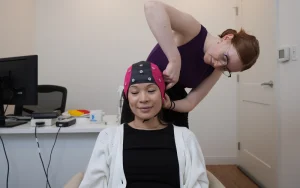
Neurofeedback is another approach being investigated for anxiety-related concerns. It uses feedback about electrical brain activity during training sessions. However, research specifically supporting neurofeedback for social anxiety remains limited, and it should not replace established treatments such as CBT.
QEEG Brain Mapping can provide information about patterns of electrical activity in the brain in selected circumstances, although it cannot diagnose social anxiety or determine its underlying cause.
At Elumind, the objective is to understand each individual’s needs and explore appropriate treatment options rather than assume that the same approach will work for everyone.
You Don’t Have to Become a Different Person
One of the biggest misconceptions about overcoming social anxiety is that success means becoming outgoing, talkative, or completely fearless. It doesn’t.
You can be a quiet person who enjoys small gatherings. You can prefer listening over speaking. You can feel nervous before an important presentation. None of these things means something is wrong. The real difference comes when you can make decisions based on what you want rather than what you’re afraid might happen.
Maybe that means finally sharing your opinion during a meeting, accepting an invitation you’ve been avoiding, or starting a conversation with someone you’d like to know better. These moments may seem small to other people, but they can represent meaningful progress.
Social anxiety can improve, and change doesn’t have to happen all at once. Sometimes, it begins with something as simple as staying in a conversation a little longer than you normally would.
You don’t need to become someone else to overcome social anxiety. You just need to give yourself more opportunities to be yourself without letting fear make every decision.
To learn more about anxiety support and available services at Elumind Centres for Brain Excellence, visit elumind.com.




 Phone:
 Monday—Friday: 9:00 AM-7:30 PM