Mental health treatment is not always a straightforward process. Two people experiencing similar symptoms may have different underlying challenges, respond differently to the same treatment, or require entirely different approaches to improve their well-being.
For example, two individuals may both struggle with concentration, fatigue, and poor sleep. One may be experiencing anxiety, while the other may have depression, ADHD, a sleep disorder, or a combination of conditions. Although their symptoms appear similar, their clinical needs may be very different.
This complexity raises an important question: How can mental health professionals develop more personalized treatment plans instead of relying only on symptoms and trial and error? One approach receiving growing attention is Quantitative Electroencephalography (QEEG), commonly known as QEEG Brain Map.
QEEG provides measurable information about the brain’s electrical activity, offering an additional perspective that may complement traditional clinical assessments. While it cannot independently diagnose mental health conditions or predict which treatment will work, it can help clinicians examine brainwave patterns and, in selected circumstances, make more informed decisions about neurofeedback training and ongoing care.
Understanding what QEEG can and cannot reveal is essential to appreciating its potential role in personalized mental health treatment.
Why mental health treatment can involve trial and error
Mental health conditions are complex because they involve interactions among biological, psychological, social, and environmental factors. Anxiety, depression, ADHD, sleep disorders, and other mental health concerns can share symptoms such as difficulty concentrating, irritability, fatigue, and emotional instability. These overlapping symptoms can make it challenging to determine which factors are contributing most to an individual’s difficulties.
Consider someone who reports persistent difficulty focusing at work. The problem could be associated with ADHD, but it might also result from chronic stress, insufficient sleep, anxiety, medication effects, or another medical condition. A comprehensive clinical assessment helps professionals investigate these possibilities through interviews, medical history, validated questionnaires, and other appropriate evaluations.
Even after a diagnosis is established, treatment responses can vary considerably. A therapy or medication that benefits one person may be less effective for another. Clinicians therefore monitor progress and adjust treatment based on individual responses.
This process is sometimes described as trial and error, although evidence-based mental health care is not simply guesswork. Clinical decisions are informed by established research, diagnostic criteria, professional judgment, and the patient’s experiences. Nevertheless, there is considerable interest in developing additional objective measures that could help clinicians understand individual differences and personalize care. QEEG Brain Map is one technology being explored for this purpose.

What is QEEG Brain Map?
Quantitative Electroencephalography is a non-invasive method of measuring and analyzing the brain’s electrical activity. The brain contains billions of neurons that communicate through electrical and chemical signals. When groups of neurons become active, their combined electrical activity can be detected using electrodes placed on the scalp.
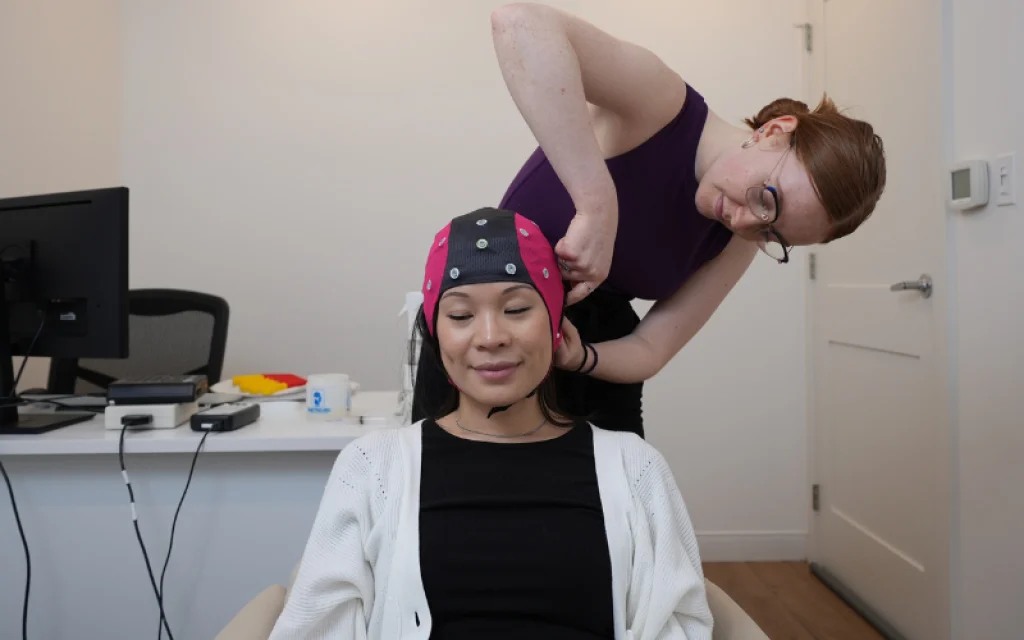
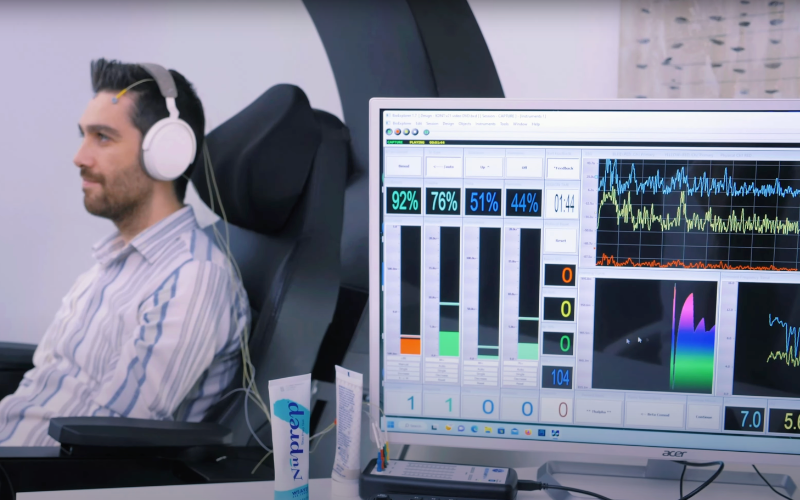
A conventional electroencephalogram, or EEG, records these signals. QEEG goes a step further by using computer-based methods to analyze features of the recorded activity. During a QEEG Brain Map session, a trained professional places sensors on specific locations across the scalp. These sensors record electrical activity while the individual remains seated, usually during resting conditions such as having their eyes open or closed.
The recording is then processed to examine different characteristics of brain activity, including the distribution and relative strength of certain frequency bands. These commonly include delta, theta, alpha, beta, and gamma activity.
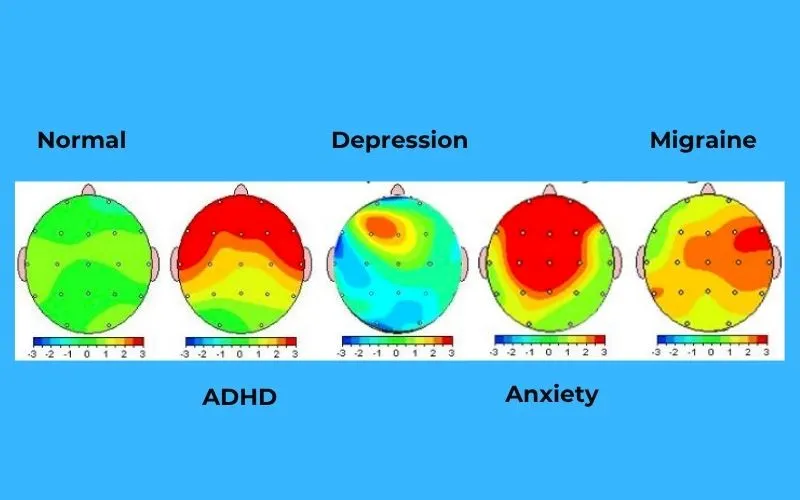
Each frequency band is associated with different aspects of brain functioning, but their meaning depends heavily on the recording conditions, brain region, age, and clinical context. The resulting information may be presented through visual brain maps, graphs, and numerical measurements.
Unlike a structural brain scan, QEEG does not show the physical anatomy of the brain. Instead, it provides information about patterns of electrical activity recorded from the scalp.
How QEEG adds objective information to mental health assessments
Traditional mental health assessments rely heavily on clinical interviews, reported symptoms, behavioural observations, and standardized questionnaires. These methods are essential because mental health conditions are defined through patterns of symptoms, functioning, and clinical history.
However, they primarily describe what an individual is experiencing rather than directly measuring the brain’s electrical activity. QEEG offers a different type of information. For example, a person may report difficulty concentrating, but that symptom alone does not reveal whether their EEG contains unusual patterns of activity.
QEEG can examine measurable characteristics of brainwave activity and compare them with appropriate reference data when clinically justified. This may help clinicians identify electrophysiological features worth considering alongside the individual’s symptoms and history.
The distinction is important: an unusual QEEG finding does not necessarily indicate a mental health disorder, and a typical recording does not rule one out. Brainwave patterns vary naturally among individuals. They can also be influenced by age, alertness, medications, sleep deprivation, movement, and recording conditions.
Therefore, the value of QEEG depends on careful data collection, appropriate interpretation, and integration with a broader clinical assessment.
Understanding individual differences in brain activity
One reason mental health treatment can be challenging is that individuals with the same diagnosis do not necessarily have identical biological characteristics. Depression, for example, is not associated with one universal brainwave pattern. Similarly, people diagnosed with ADHD or anxiety may show considerable variation in their EEG recordings.
This variability helps explain why researchers are interested in examining brain activity at the individual level. QEEG may reveal differences in the distribution, amplitude, or timing of electrical activity across scalp locations. These findings can generate questions for clinicians and researchers about how certain brainwave characteristics relate to attention, alertness, or other aspects of functioning.
However, it would be misleading to suggest that QEEG can reliably identify the precise neurological cause of a person’s anxiety, depression, or concentration difficulties. Research into EEG-based biomarkers for psychiatric conditions is ongoing, and many proposed findings have not demonstrated sufficient reliability or clinical usefulness for routine diagnostic decision-making.
The potential benefit of QEEG is therefore not that it reveals a hidden diagnosis unavailable through other methods. Rather, it provides an additional physiological perspective that may be useful in specific clinical applications.
How QEEG may support personalized neurofeedback training
One of the more practical applications of QEEG is in the planning of certain neurofeedback programs. Neurofeedback is a training approach that uses real-time information about brain activity to provide feedback to the individual. During a neurofeedback session, sensors monitor electrical signals while the person receives visual or auditory feedback, often through a computer-based activity.
The training system is designed to reinforce particular characteristics of brain activity. Because neurofeedback protocols can target different EEG features, some practitioners use QEEG findings to help select training locations or parameters.
For example, a clinician may review a person’s recorded brainwave patterns, consider their reported difficulties, and use this information when deciding how to structure a neurofeedback program. This approach is often described as QEEG-informed neurofeedback. It offers a framework for tailoring training rather than automatically applying the same protocol to every client.
When considered, it is best incorporated into a comprehensive treatment plan with realistic goals and appropriate clinical monitoring.
Can QEEG help monitor changes over time?
Another potential application of QEEG involves comparing brain activity recordings collected at different points during care. A baseline recording may be obtained before beginning a neurofeedback program, followed by additional recordings after a period of training. These measurements can show whether certain EEG characteristics have changed.
For example, a clinician might observe differences in the relative power of specific frequency bands between recordings. However, interpreting these changes requires caution.
Brainwave activity naturally fluctuates depending on sleep, fatigue, alertness, medications, and testing conditions. A difference between two recordings does not necessarily indicate meaningful clinical improvement.
More importantly, changes in EEG measurements do not always correspond to improvements in symptoms or everyday functioning. For this reason, progress should also be evaluated through established clinical measures, symptom questionnaires, functional goals, and the individual’s own experiences.
If someone begins sleeping better, functioning more effectively at work, or experiencing fewer anxiety symptoms, these changes provide important evidence of progress. QEEG may offer supplementary information, but treatment success should ultimately be judged by meaningful improvements in health and quality of life.
What QEEG cannot tell us about mental health
Although QEEG is a sophisticated technology, understanding its limitations is essential. QEEG cannot independently diagnose depression, anxiety disorders, ADHD, PTSD, or most other psychiatric conditions.
It cannot determine someone’s thoughts, identify the exact cause of emotional distress, or guarantee that a particular medication or therapy will be effective. It also cannot reliably establish that a specific brain region is responsible for an individual’s symptoms simply because a brain map displays an unusual pattern.
Professional organizations have raised concerns about using quantitative EEG as a routine diagnostic tool for psychiatric disorders when supporting evidence is insufficient. These limitations do not make QEEG meaningless. They highlight the importance of using the technology responsibly and avoiding claims that extend beyond current scientific evidence.
The strongest approach combines appropriate physiological measurements with established clinical methods rather than treating one technology as the definitive answer.
Why personalized mental health care requires more than one assessment
Mental health is influenced by many interconnected factors. Sleep quality, chronic stress, medical conditions, nutrition, physical activity, relationships, trauma history, and environmental pressures can all affect emotional and cognitive functioning.
For example, someone experiencing anxiety and difficulty concentrating may also have significant sleep deprivation. Addressing sleep difficulties could improve both symptoms without requiring a brain-based intervention.
Similarly, an individual experiencing persistent fatigue and low mood may benefit from evaluation for medical contributors, such as thyroid problems or anemia, when clinically indicated. A comprehensive treatment plan therefore considers the whole person.
Clinical interviews, standardized assessments, medical evaluations, and appropriate diagnostic tools provide different pieces of information. QEEG may be considered as an additional component when there is a clear reason for collecting electrophysiological data, particularly in certain metal health treatment settings. The objective is not to perform as many tests as possible. It is to select assessments that provide useful information and support appropriate decisions.
QEEG Brain Map at Elumind Centres
At Elumind Centres for Brain Excellence, we recognize that individuals experiencing similar mental health challenges may have different needs, histories, and treatment goals. Our approach emphasizes personalized assessment and treatment planning rather than assuming that one treatment will work equally well for everyone.
QEEG Brain Map is among the technologies available at Elumind to examine patterns of electrical brain activity. Following an appropriate clinical assessment, QEEG findings may provide supplementary information that our team can consider when discussing neurofeedback training and other aspects of care.
Depending on the individual’s needs and clinical recommendations, treatment options may include Neurofeedback, Biofeedback, tDCS, Transcranial Magnetic Stimulation (TMS), PBM, and other services. Each approach has its own indications, limitations, and level of scientific evidence. The suitability of a treatment depends on the person’s condition, medical history, preferences, and clinical assessment.
Our goal is to combine professional clinical judgment with relevant assessment information to develop individualized treatment plans and monitor meaningful progress. Rather than promising that a brain map will provide every answer, we believe it is important to help clients understand what the technology measures, what its findings may suggest, and where its limitations lie.
The future of Brain Map and personalized mental health treatment
The field of mental health care is gradually moving toward more individualized approaches. Researchers are investigating how brain activity measurements, neuroimaging, genetic information, behavioural assessments, and other biological data might improve treatment selection.
The long-term goal is to identify reliable indicators that help clinicians predict which interventions are most likely to benefit particular individuals. QEEG is part of this broader research effort.
Advances in signal processing, artificial intelligence, and large-scale clinical studies may eventually improve the ability to interpret EEG patterns and understand their relationship to mental health conditions.
However, scientific progress requires careful validation. A measurement must demonstrate that it improves clinical decisions and patient outcomes before it can be considered a reliable treatment-selection tool. Until then, QEEG is best understood as a potentially useful supplementary technology rather than a proven solution to all uncertainty in mental health care.
Conclusion: Reducing guesswork through better understanding
Mental health treatment is complex because every individual brings a unique combination of symptoms, experiences, biological characteristics, and personal circumstances. Although evidence-based clinical assessments remain the foundation of effective mental health care, additional technologies may provide useful perspectives in selected situations.
QEEG Brain Map offers a non-invasive way to measure and analyze electrical brain activity. It can provide supplementary physiological information, contribute to certain neurofeedback planning approaches, and allow clinicians to examine changes in EEG characteristics over time.
However, QEEG does not eliminate uncertainty, replace clinical diagnosis, or guarantee better treatment outcomes.
The real opportunity lies in combining appropriate technology with comprehensive assessment, professional expertise, and ongoing evaluation of meaningful results.
At Elumind Centres for Brain Excellence, we aim to support this individualized approach by helping clients explore their mental health needs through professional assessment and appropriate care options.
If you would like to learn more about QEEG Brain Map and whether it may be relevant to your care, visit elumind.com to explore our services or request a free 15-minute phone consultation.





 Phone: (604) 220-8866 |
 Monday—Friday: 9:00 AM-7:30 PM