Neurofeedback therapy is a type of brain training that teaches your brain to regulate itself more effectively. Using real-time monitoring of your brain activity, it provides immediate feedback that helps your brain learn new, healthier patterns. Think of it as physical therapy for your brain, a non-invasive, drug-free approach that’s been used for decades to help people with ADHD, anxiety, PTSD, depression, sleep insomnia, and other brain-based challenges.
If you’ve been struggling with symptoms that haven’t responded well to traditional treatments, or if you’re looking for alternatives to medication, understanding what neurofeedback is and how it works might open up new possibilities for your mental health journey.
How does neurofeedback work?
Your brain is constantly generating electrical activity. Every thought, emotion, and action creates patterns of brainwaves that can be measured using an electroencephalogram (EEG). Neurofeedback works by monitoring these brainwave patterns in real time and providing instant feedback when your brain produces desired activity.
Here’s what happens during a typical neurofeedback session:
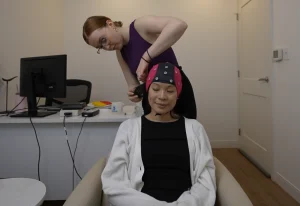
- Sensors are placed on your scalp to measure your brainwave activity. These sensors simply read electrical signals, they don’t send anything into your brain.
- You watch a screen or listen to audio that responds to your brain activity. This might be a video, a game, or simple visual feedback.
- When your brain produces healthy patterns, the feedback is positive, the video plays smoothly, the game advances, or you hear pleasant tones.
- When problematic patterns occur, the feedback changes, the screen might dim slightly or the audio shifts.
- Your brain learns through repetition. Over multiple sessions, your brain gradually learns to produce more of the healthy patterns and less of the problematic ones.
The remarkable thing about neurofeedback is that you don’t have to consciously try to change your brainwaves. Your brain figures out the patterns on its own through this operant conditioning process. It’s similar to how you learned to ride a bike, your brain made thousands of tiny adjustments until balance became automatic.
The science behind neurofeedback
Neurofeedback is based on the principle of neuroplasticity, your brain’s ability to reorganize itself and form new neural connections throughout life. Research has shown that brainwave patterns are directly connected to mental states and that these patterns can be modified through training.
Different brainwave frequencies are associated with different states of consciousness:
- Delta waves (0.5-4 Hz): Deep sleep and healing
- Theta waves (4-8 Hz): Light sleep, deep relaxation, creativity
- Alpha waves (8-13 Hz): Calm alertness, relaxed focus
- Beta waves (13-30 Hz): Active thinking, problem-solving, concentration
- Gamma waves (30+ Hz): Higher cognitive functioning, information processing
When these frequencies are out of balance, too much activity in some ranges, too little in others, you may experience symptoms. Someone with ADHD might have excessive theta waves (drowsy, unfocused) and insufficient beta waves (alert attention). Someone with anxiety might have too much high-beta activity (racing thoughts, hypervigilance).
Neurofeedback identifies these imbalances through QEEG brain map and then trains specific areas of your brain to shift toward healthier patterns.

What conditions does neurofeedback treat?
Neurofeedback has been researched for over 50 years and has demonstrated effectiveness for a wide range of conditions. While it’s not a cure-all, many people experience significant improvements in symptoms that have been difficult to manage with other approaches.
ADHD and Focus Issues – Neurofeedback is perhaps best known for treating ADHD. Multiple research studies have shown it can improve attention, reduce impulsivity, and help with emotional regulation. The American Academy of Pediatrics has rated neurofeedback as a Level 1 ‘Best Support’ intervention for ADHD, the same rating given to medication.
People often notice improvements in their ability to start and complete tasks, stay organized, and manage time more effectively. Many adults report finally feeling like they can access the focus they’ve been searching for.
Anxiety and Panic – Anxiety often involves overactive brain patterns in areas responsible for threat detection and worry. Neurofeedback can help calm these overactive regions while strengthening areas associated with emotional regulation and calm states.
People with anxiety frequently report feeling more grounded, less reactive to triggers, and better able to interrupt worry spirals. Physical symptoms like racing heart, shallow breathing, and muscle tension often decrease as well.
Depression and Mood Disorders – Depression is associated with specific brainwave patterns, including underactivity in the left frontal regions of the brain. Neurofeedback targets these imbalances, helping to restore more balanced brain function.
Many people notice gradual improvements in energy, motivation, and the ability to experience positive emotions. Sleep often improves as well, which further supports mood recovery.
Autism Spectrum Disorder – Research on neurofeedback for ASD is still building, but the direction is encouraging. Several reviews have found that the majority of clinical trials report gains in attention, executive function, and emotional regulation. One review of cognitive outcomes found improvement in 83% of the studies examined, including benefits for memory and speech. Not every symptom responds the same way, and researchers are still working out which protocols help most. Families often notice calmer transitions, better focus during learning tasks, and fewer meltdowns tied to sensory overload.
Post-Traumatic Stress Disorder (PTSD) – Neurofeedback has become a serious option for PTSD treatment, especially for people who haven’t responded well to talk therapy or medication. A systematic review and meta-analysis found moderate but consistent benefits for PTSD symptoms, along with improvements in depression and anxiety. In one randomized trial, veterans who completed neurofeedback training showed significantly larger drops in PTSD symptom scores than the control group. Sleep tends to improve too. People often describe feeling less reactive, less on edge, and more able to sit with difficult memories without getting flooded by them.
Obsessive-Compulsive Disorder – The evidence for OCD is smaller in volume but striking in size. A meta-analysis pooling more than 1,200 patients across nine studies found a statistically significant benefit for neurofeedback compared to other treatments. Other trials targeting rumination and cognitive avoidance, two of the most stubborn features of OCD, reported meaningful symptom drops after just a few weeks of training. Patients frequently describe a quieter internal loop. The intrusive thoughts don’t disappear entirely, but the compulsion to act on them loses some of its grip.
Sleep Problems – Difficulty falling asleep, staying asleep, or achieving restorative sleep often relates to brainwave patterns that don’t properly transition between wake and sleep states. Neurofeedback can train your brain to move more smoothly into sleep-supportive frequencies.
Peak Performance – You don’t need to have a diagnosed condition to benefit from neurofeedback. Athletes, executives, students, and performers use it to optimize focus, reduce performance anxiety, and achieve flow states more consistently.
What to expect during neurofeedback sessions
Understanding what happens during neurofeedback can help you feel more comfortable and prepared if you decide to try it.
Initial Assessment – Your first visit typically includes the therapeutic assessment and QEEG brain map. Small sensors are placed on your scalp to record your brainwave activity while you’re at rest, eyes open, eyes closed, and during simple tasks. This creates a detailed map of your brain function that identifies areas of concern and guides your personalized training protocol.
You’ll also discuss your symptoms, goals, medical history, and what you hope to achieve. This information helps create a training plan tailored specifically to your brain and your needs.
Regular Training Sessions – Neurofeedback sessions typically last 45-50 minutes and happen 2-4 times per week. During the session:
- Sensors are placed on specific locations on your scalp
- You sit comfortably and watch a movie and listen to audio
- Your only job is to pay attention to the feedback, your brain does the learning automatically
- Many people find sessions relaxing; some even fall asleep
- There’s no pain, no electricity entering your brain, and no side effects for most people
How long does it take? – Most people complete 30-60 sessions, though this varies based on individual needs and goals. You might notice subtle changes within the first few sessions, better sleep, more energy, improved mood. More significant changes typically emerge after 20-30 sessions as your brain establishes new patterns.
The benefits of neurofeedback tend to be lasting because you’ve actually trained your brain to function differently. It’s not like taking medication that stops working when you stop taking it. Your brain has learned new patterns.
Is neurofeedback right for you?
Neurofeedback can be an excellent option if you:
- Haven’t found relief from traditional treatments or want to reduce medication dependence
- Prefer drug-free approaches or are concerned about medication side effects
- Want to address root causes rather than just managing symptoms
- Have complex presentations where multiple issues overlap (ADHD plus anxiety, for example)
- Are interested in optimizing performance even if you don’t have a diagnosis
That said, neurofeedback works best as part of a comprehensive approach. It’s most effective when combined with good sleep habits, proper nutrition, stress management, and other supportive therapies as needed. It’s also not appropriate for active psychosis or severe mania, and it’s not a substitute for crisis intervention.
How brain-based therapy can help
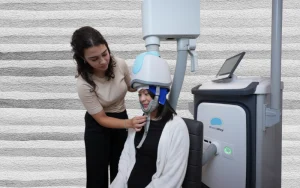
At Elumind, neurofeedback is one of several evidence-based brain training approaches we offer. We also provide biofeedback, which trains your body’s stress response systems, and Transcranial Magnetic Stimulation (TMS), which uses magnetic pulses to stimulate specific brain regions.
What makes our approach unique is the comprehensive assessment we begin with. Your qEEG brain map shows us exactly where your brain needs support, allowing us to create a truly personalized protocol. We’re not guessing or using one-size-fits-all protocols, we’re responding to your brain’s specific patterns.
Our clinics across British Columbia offer warm, professional environments where you can feel comfortable exploring whether neurofeedback is right for you. Many of our clients describe finally feeling heard and finding an approach that makes sense for how their brain actually works.
You can learn more about our neurofeedback services and read detailed information about how we approach treatment at elumind.com/services/neurofeedback.
We also offer complementary approaches that work well alongside neurofeedback:
- Biofeedback for stress, pain, and physiological regulation
- TMS Therapy for depression and anxiety
- Photobiomodulation or PBM for anxiety and mood disorder
Getting started with neurofeedback
If you’re curious whether neurofeedback might help with what you’re experiencing, the first step is a free consultation. This is a no-pressure conversation where you can ask questions, learn more about how neurofeedback works, and find out what a personalized approach might look like for you.
During your free consultation, we’ll discuss:
- Your symptoms and how they’re affecting your daily life
- What you’ve already tried and what’s worked or hasn’t worked
- How neurofeedback might address your specific concerns
- What the assessment and training process would look like
There’s no obligation, just an opportunity to explore whether this approach feels right for you. Elumind has clinics throughout British Columbia, making evidence-based brain training accessible wherever you are:
When to seek professional support
If you’re struggling with focus, mood, anxiety, sleep, or other brain-based challenges that are affecting your quality of life, professional assessment can provide clarity and direction. You don’t need to wait until things are severe, early intervention often leads to faster, more complete improvement.
Signs that neurofeedback assessment might be beneficial:
- Your symptoms haven’t improved with other treatments
- You want to reduce or eliminate medications (with your doctor’s guidance)
- You’re experiencing side effects from current treatments
- You prefer non-invasive, drug-free approaches
- You’re curious about what your QEEG brain map would reveal.
Getting started is simple. Book your free consultation online at elumind.com/booking or call us at (604) 220-8866. Our team is here to answer questions and help you take the next step toward better brain health.
Neurofeedback isn’t magic, but for many people, it provides the missing piece in their mental health journey, a way to work directly with their brain’s natural ability to heal and regulate itself. If you’ve been searching for an approach that addresses root causes rather than just masking symptoms, neurofeedback might be worth exploring.



 Phone: (604) 220-8866 |
  Monday—Friday: 9:00 AM-7:30 PM