Post-traumatic stress disorder (PTSD) affects how your brain processes safety, memory, and emotional regulation, and traditional talk therapy, while valuable, doesn’t always reach the neural circuits where trauma gets stuck. Deep Transcranial Magnetic Stimulation (Deep TMS) offers a different approach: non-invasive brain stimulation that targets the specific networks involved in trauma response, helping your brain recalibrate without medication or prolonged exposure to traumatic memories.
At Elumind Surrey, we offer FDA-cleared Deep TMS therapy using Brainsway technology, a treatment backed by clinical research for PTSD and approved for use in trauma recovery. This page explains how Deep TMS works for PTSD, what the research shows, and what treatment looks like at our Surrey clinic.
Understanding PTSD and the Brain
PTSD isn’t just psychological, it’s neurobiological. When you experience trauma, your brain’s alarm system (the amygdala) can become hyperactive, while areas responsible for rational thinking and emotional regulation (like the prefrontal cortex) become underactive. This creates a pattern where:
- Threat detection stays on high alert – your nervous system interprets safe situations as dangerous
- Memory processing gets disrupted – traumatic memories remain unintegrated, triggering flashbacks and intrusive thoughts
- Emotional regulation becomes difficult – small stressors feel overwhelming because the brake system isn’t working properly
- Avoidance patterns develop – your brain tries to protect you by avoiding anything that might trigger the memory
Traditional PTSD treatments like cognitive behavioral therapy (CBT) and EMDR work with these patterns at the psychological level. Deep TMS works at the neural level, directly stimulating the brain regions involved in trauma processing to help restore healthy functioning.
How Deep TMS Works for PTSD
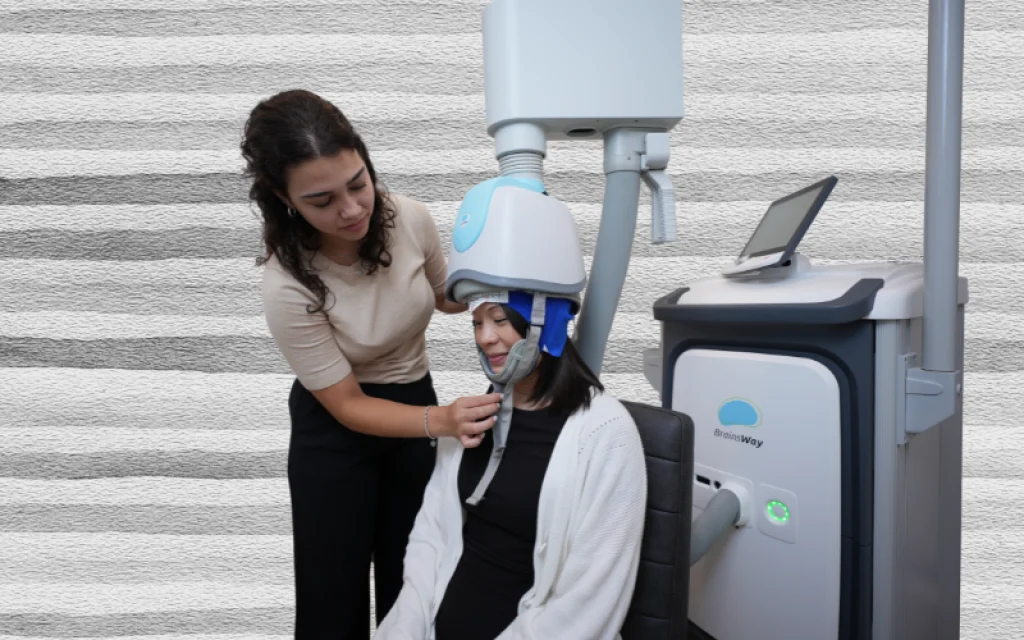
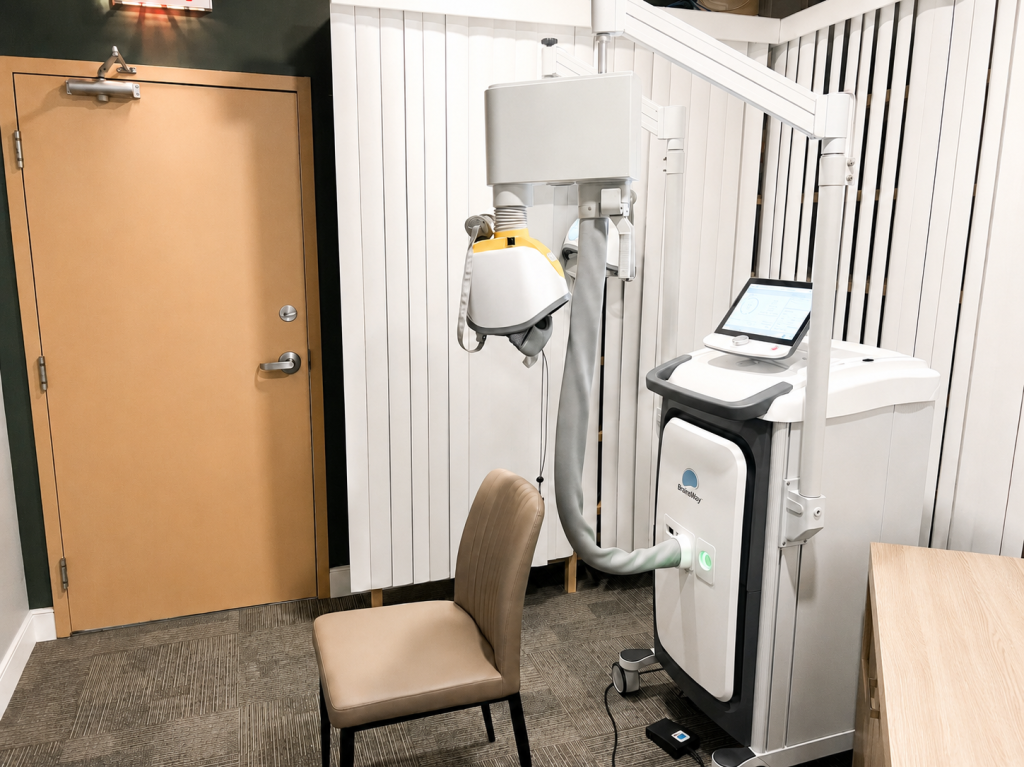
Deep TMS uses magnetic pulses to stimulate specific brain regions associated with PTSD symptoms. Unlike standard TMS, which reaches only surface brain areas, Deep TMS penetrates deeper into limbic structures, the emotional processing centers where trauma responses live.
During treatment, a specialized helmet delivers targeted magnetic pulses to areas including:
- The prefrontal cortex – enhancing executive function, emotional regulation, and contextual memory processing
- The anterior cingulate cortex – involved in emotional regulation and fear extinction
- Deeper limbic regions – including areas connected to threat detection and stress response
The magnetic stimulation works like a reset for these circuits. It doesn’t erase memories or create artificial calm, it helps your brain regain its natural ability to distinguish between past trauma and present safety, to process difficult emotions without becoming overwhelmed, and to respond to stress in proportion to actual threat.
What the Research Shows
Deep TMS for PTSD has been studied in multiple clinical trials, including research that led to FDA clearance. Studies show significant reductions in:
- PTSD symptom severity scores (measured by clinical assessment tools)
- Intrusive thoughts and flashbacks
- Hypervigilance and exaggerated startle response
- Emotional numbing and avoidance behaviors
- Co-occurring depression and anxiety symptoms
Importantly, many participants in these studies had not responded adequately to previous treatments, making Deep TMS a viable option for treatment-resistant PTSD. The effects can begin within 3-4 weeks of treatment and continue to improve with ongoing sessions.
What PTSD treatment looks like at Elumind Surrey
Deep TMS for PTSD is not a quick fix, but it is a structured, evidence-based protocol. Here’s what to expect when you come to our Surrey clinic:
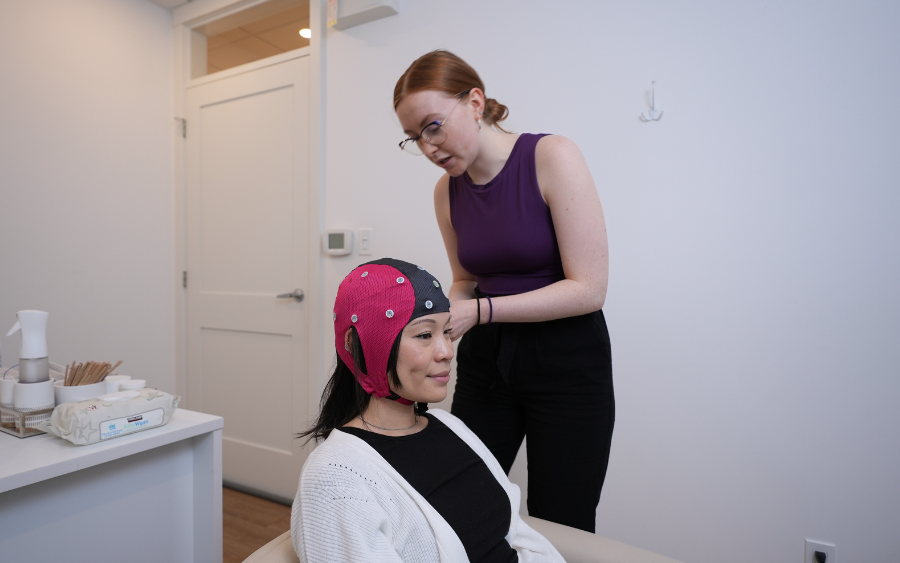
Therapeutic Assessment and QEEG Brain Map – Your treatment begins with a comprehensive assessment where we assess your trauma history, current symptoms, and treatment goals. We use quantitative EEG (qEEG) brain map to measure your brain’s electrical activity and identify specific patterns associated with PTSD, such as hyperarousal in fear circuits or underactivity in regulatory regions.
This brain map helps us understand your unique neurological presentation and tailor the TMS protocol to your needs. It also gives us objective data to track your progress throughout treatment.
The treatment protocol
Deep TMS for PTSD typically involves:
- Frequency: 5 sessions per week (Monday through Friday)
- Duration per session: depends on your protocole.
- Total treatment course: 4-8 weeks depending on symptom severity and response
- What it feels like: a tapping sensation on your scalp, not painful, though some people find it slightly uncomfortable in the first few sessions
You remain fully awake during treatment. Many clients read, listen to music, or simply relax. There’s no sedation and no recovery time, you can drive yourself home and return to normal activities immediately.
Combining Deep TMS with therapy
Deep TMS is most effective when combined with trauma-focused psychotherapy. At Elumind Surrey, we work collaboratively with therapists who specialize in PTSD treatment, including those trained in EMDR, somatic experiencing, and trauma-informed CBT.
The brain stimulation creates a window of neuroplasticity, your brain becomes more receptive to new learning and memory reconsolidation. When you engage in therapy during this window, the therapeutic work can go deeper and integrate more effectively. Many clients report that therapy feels more productive and less overwhelming once they’ve begun TMS treatment.
Who benefits from Deep TMS for PTSD
Deep TMS may be particularly helpful if you:
- Haven’t fully responded to therapy alone – you’ve done CBT or EMDR but still struggle with intrusive symptoms
- Want to avoid or reduce psychiatric medications – or have experienced intolerable side effects from PTSD medications
- Have co-occurring depression or anxiety – Deep TMS addresses multiple conditions simultaneously
- Experience severe avoidance – the idea of trauma-focused therapy feels too overwhelming right now
- Have complex or developmental trauma – multiple traumas or childhood trauma that has shaped brain development
Deep TMS is FDA-cleared for adults with PTSD. It’s contraindicated if you have metal implants in or near your head (excluding dental fillings), a history of seizures, or certain neurological conditions. A thorough medical screening is conducted before treatment begins.
The Elumind approach to trauma-informed care
Treating PTSD requires more than technology, it requires safety, respect, and an understanding of how trauma affects the nervous system. At Elumind Surrey, we:
- Move at your pace – treatment is collaborative, not prescriptive. You’re in control of your healing timeline
- Prioritize nervous system regulation – we teach grounding techniques and offer biofeedback training to support your window of tolerance
- Coordinate with your existing care team – we communicate with your therapist, psychiatrist, or family doctor to ensure integrated care
- Track progress objectively – through symptom scales, qEEG follow-ups, and your subjective experience
- Provide education – understanding what’s happening in your brain reduces fear and increases agency
We recognize that walking into a clinic for brain stimulation can feel vulnerable, especially when you’re already carrying the weight of trauma. Our team is trained in trauma-informed practices, and we work hard to make the space as safe and predictable as possible.
What to expect: The timeline of improvement
Response to Deep TMS varies, but here’s a general pattern we observe:
Weeks 1-2: You may notice small shifts, slightly better sleep, less irritability, or moments where you feel a bit more present. Some people feel worse initially as their nervous system adjusts.
Weeks 3-4: This is when many clients report noticeable changes, fewer nightmares, less reactivity to triggers, or a sense that the volume on hypervigilance has turned down. Intrusive thoughts may still occur but feel less consuming.
Weeks 5-8: Gains continue to build. You may notice you’re engaging more in activities you’d been avoiding, feeling emotions more fully but less overwhelmingly, and experiencing longer stretches of time without being hijacked by PTSD symptoms.
Post-treatment: Many clients continue to improve in the weeks following treatment completion as the brain consolidates new patterns. We offer maintenance sessions if needed, but many people maintain gains with therapy and lifestyle support alone.
Investment in your recovery
Deep TMS for PTSD is an investment in reclaiming your life from trauma.
We offer:
- Free 15-minute phone consultations to determine if Deep TMS is appropriate for you
- Payment plans to make treatment financially accessible

Important Safety Information
Deep TMS is generally well-tolerated, but potential side effects include:
- Temporary headache or scalp discomfort (most common, usually resolves within a few days)
- Lightheadedness during or after treatment
- Temporary increase in emotional reactivity as the brain recalibrates
- Extremely rare: seizure (less than 0.1% risk, mostly in people with pre-existing seizure disorders)
Important: Elumind is a mental health center, not a crisis service. If you are experiencing suicidal thoughts, severe dissociation, or are in immediate danger, please contact:
- BC Crisis Line: 1-800-784-2433 (24/7)
- Surrey Crisis Line: 604-951-8855
- Emergency services: 911
Getting Started: Your Next Steps
If you’re living with PTSD in Surrey, Langley, Maple Ridge, and surrounding areas, whether your trauma is recent or decades old, whether you’ve tried multiple treatments or this is your first step toward help, Deep TMS may offer a path forward.
Here’s how to begin:
- Book a free consultation: Meet with our clinical team to discuss your symptoms, history, and whether Deep TMS is a good fit. This conversation is obligation-free and confidential.
- Complete a qEEG brain map: If we move forward, we’ll measure your brain’s activity to understand your specific PTSD signature and customize treatment.
- Begin treatment: Most clients start within 1-2 weeks of their initial consultation, depending on scheduling.
You can book online at elumind.com/booking or call us directly at (604) 220-8866. We’re located in #203-17700 56th Ave., Surrey.
Why Elumind Surrey for PTSD Treatment
Choosing where to receive trauma treatment matters. At Elumind Surrey, you’ll find:
- FDA-cleared Brainsway Deep TMS technology – the only TMS system specifically cleared for PTSD treatment
- Clinicians trained in trauma-informed care – we understand the neurobiology of PTSD and the importance of safety and pacing
- qEEG-guided treatment – objective brain data that personalizes your protocol and tracks your progress
- Collaborative care model – we work with your existing mental health providers to ensure integrated treatment
- Convenient Surrey location – easy access from South Surrey, White Rock, Langley, Maple Ridge, and Delta
We’ve worked with clients whose PTSD stems from many different sources, military service, childhood abuse, car accidents, medical trauma, and other life-altering experiences. Whatever brought you here, you don’t have to carry it alone, and you don’t have to feel this way forever.
Recovery from PTSD isn’t about going back to who you were before, it’s about integrating what happened, reclaiming your nervous system, and building a life where the past doesn’t control the present. Deep TMS can be a powerful tool in that process.
Ready to take the next step? Book your free consultation or call (604) 220-8866 to speak with our client care team.




 Phone: (604) 220-8866 |
  Monday—Friday: 9:00 AM-7:30 PM