Depression is a global mental health crisis. Affecting over 280 million people worldwide, it is the leading cause of disability and a major contributor to the overall global burden of disease. While antidepressants and psychotherapy remain the most common first-line treatments, many individuals do not respond adequately to these approaches or suffer from unwanted side effects. This has led to increased interest in alternative, non-invasive treatments. One such promising therapy is Transcranial Direct Current Stimulation (tDCS).
In this blog, we will explore how tDCS works, the scientific evidence supporting its use for depression, and how this gentle, non-invasive brain stimulation method can be an essential part of a modern mental health toolkit.
What is tDCS?
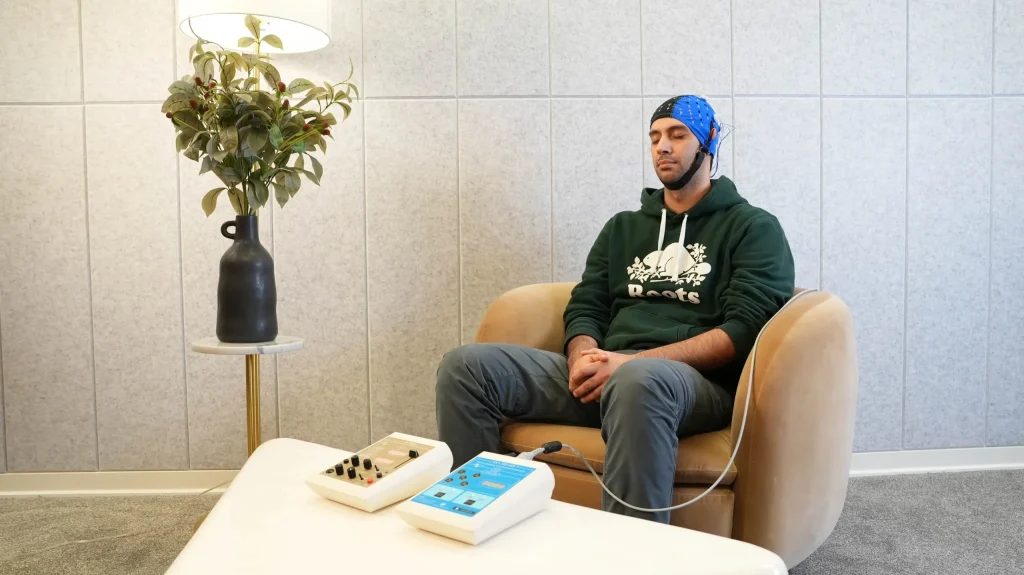
Transcranial Direct Current Stimulation (tDCS) is a form of neuromodulation that involves delivering a very low-level constant electrical current (typically 1-2 mA) to specific regions of the brain through electrodes placed on the scalp. Unlike electroconvulsive therapy (ECT), which delivers high-voltage pulses and requires anesthesia, tDCS is gentle, safe, painless, and performed while the patient is fully awake.
The current modifies the excitability of neurons: the anode (positive electrode) generally increases excitability and activity in the underlying brain area, while the cathode (negative electrode) decreases it. For depression, stimulation is typically targeted at the left dorsolateral prefrontal cortex (DLPFC), a region involved in mood regulation, decision-making, and motivation.

Why the brain needs help in Depression!
Depression is not simply a chemical imbalance. Modern neuroscience shows that it involves disrupted activity in specific neural circuits, particularly those involved in:
- Emotion regulation (prefrontal cortex and limbic system)
- Reward and motivation (striatum and anterior cingulate cortex)
- Stress and arousal (amygdala and hypothalamus)
Neuroimaging studies have consistently found hypoactivity (underactivity) in the left DLPFC in people with depression. This area is crucial for regulating negative thoughts, planning future goals, and engaging in effortful tasks—all commonly impaired in depressive states.
By gently increasing activity in this region, tDCS offers a way to “reset” or modulate the dysfunctional circuits associated with depression.
Scientific evidence for tDCS in Depression
Over the past 15 years, numerous randomized controlled trials (RCTs), systematic reviews, and meta-analyses have evaluated the effectiveness of tDCS in treating major depressive disorder (MDD).
Key Findings:
- Significant Symptom Reduction – A meta-analysis published in JAMA Psychiatry (2016) analyzed over 30 RCTs and concluded that tDCS led to a significant improvement in depressive symptoms compared to sham (placebo) stimulation.
- Comparable to Antidepressants – In several studies, tDCS performed on par with certain antidepressants (like SSRIs) in terms of symptom reduction, especially when used in mild to moderate depression.
- Low Risk of Side Effects – Reported side effects are typically minimal and include slight itching or tingling under the electrodes, mild headache, or temporary fatigue.
- Sustained Improvement with Multiple Sessions – Most effective results occur when tDCS is delivered in a structured program: 15-20 sessions over several weeks, often followed by maintenance sessions.
- Combination Therapy Enhances Outcomes – When combined with cognitive behavioral therapy (CBT), mindfulness, or medication, tDCS often shows synergistic effects.
Benefits of tDCS for Depression
- Non-invasive and drug-free
- No sedation or anesthesia required
- Can be administered in an outpatient or home setting
- Rapid onset of symptom relief in some cases
- Customizable targeting based on symptom profile
- Safe for long-term use with proper protocols
Who can benefit from tDCS?
- Individuals with mild to moderate depression
- Those who do not respond well to medication
- People who experience intolerable side effects from antidepressants
- Individuals seeking a non-drug, non-invasive approach
- Patients looking for a complementary tool to enhance therapy or mindfulness practices
However, tDCS is not a substitute for emergency care or psychiatric intervention in severe, suicidal, or psychotic depression. A comprehensive evaluation is essential before starting treatment.

How tDCS is delivered at Elumind!
At Elumind Centres for Brain Excellence, we integrate tDCS as part of our personalized treatment plans for individuals experiencing depression.
Step-by-Step Approach:
- Initial Assessment – Comprehensive evaluation including Therapeutic Assessment and QEEG Brain Map to identify brain regions with dysregulated activity.
- Customized Stimulation Plan – Based on your QEEG results and clinical profile, we create a tailored protocol targeting the relevant areas.
- Combined Neurotherapies – tDCS is often paired with other treatments such as:
- Neurofeedback: To train brainwaves and reinforce self-regulation.
- Biofeedback: To manage stress-related physiological symptoms.
- PBM (Photobiomodulation): To enhance energy metabolism and brain repair.
- Supportive Therapy: To reinforce new mental patterns.
- Monitoring and Feedback
- Session-by-session tracking of mood, energy, sleep, and cognitive focus
- Mid-program reassessment with QEEG and clinical review sessions
- Maintenance and Follow-up
- Once the primary course is complete, maintenance sessions are available monthly or as needed to prevent relapse.
What does a session feel like?
A typical session lasts 20-30 minutes. The technician applies small sponge electrodes to your scalp, usually using a saline solution. Once activated, you may feel a mild tingling or warm sensation, which quickly fades. During the session, you can read, relax, or engage in guided exercises, depending on the treatment plan.
Myths and Facts about tDCS
- Myth: It’s like electric shock therapy.
- Fact: tDCS is very low-current and does not induce seizures or unconsciousness.
- Myth: It’s experimental and unsafe.
- Fact: tDCS has over two decades of research and is considered safe under professional protocols.
- Myth: It cures depression instantly.
- Fact: tDCS is a tool to support brain regulation. It usually requires multiple sessions and combined strategies.
- Myth: It can change your personality.
- Fact: It enhances emotional and cognitive flexibility but does not overwrite identity.
Real Stories, Real Impact!
Many of our clients have reported:
- Reduced emotional heaviness and fog
- Increased motivation and focus
- Better sleep and energy levels
- Renewed sense of self-efficacy and hope
When used in combination with Elumind’s integrative framework, tDCS becomes not just a treatment, but a bridge toward full mental wellness.
Conclusion: A new era in Depression treatment.
tDCS represents a shift in how we approach depression, not merely as a chemical imbalance, but as a dynamic brain-based condition with flexible treatment options. It opens doors for those who have felt stuck, hopeless, or left behind by conventional treatment.
If you or a loved one is struggling with depression, know that support exists beyond the traditional options. At Elumind, we offer innovative, personalized, and compassionate care rooted in neuroscience and human connection.
Reach out today for a free consultation and discover if tDCS is the next step on your path to healing.





 Phone: (604) 220-8866 |
  Monday—Friday: 9:00 AM-7:30 PM